Cold-Climate Condensation and Zone 7 Envelopes for Tasmanian Architects
$99.00 GST
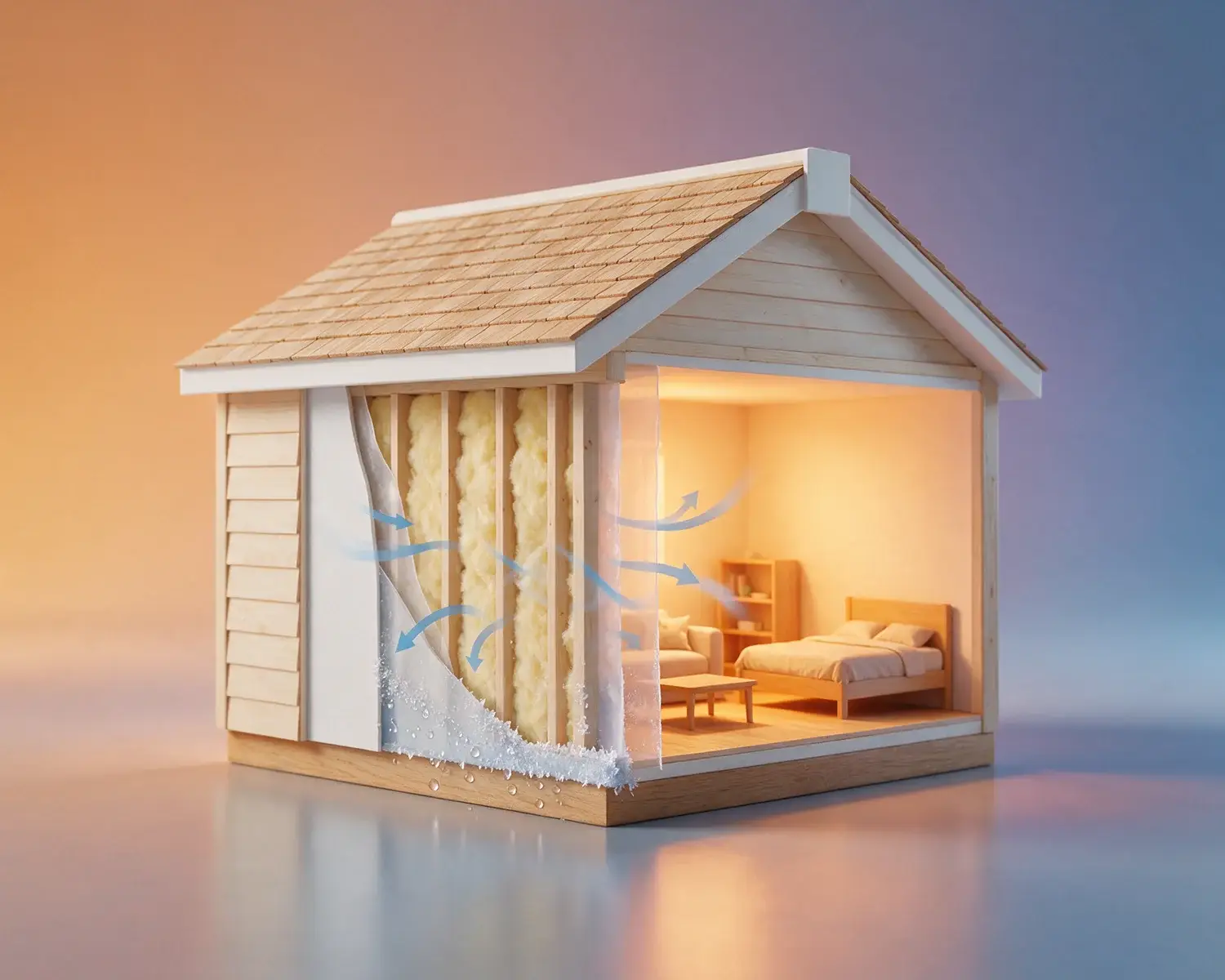
Most of populated Tasmania sits in NCC climate zone 7, where a heated home is warmer and more humid inside than out and every cold surface and cold layer in the fabric is a place for that moisture to condense.
This one hour condensation CPD course for Tasmanian architects covers how condensation forms in a heating-dominated climate, the NCC 2022 condensation management provisions for walls and roofs, vapour control tight to the warm inside and open to the outside, insulation continuity, air tightness with controlled ventilation, glazing, wet areas and low-profile roofs, and the buildability, heat recovery ventilation and documentation that make the envelope survive construction.
Fully online and self paced. Your certificate is issued the moment you finish and is stored in your account.
NatHERS Technical CPD, category d (building envelope thermal performance) under clause 4.5(5) of the AAO Protocol. 1 hour of Technical CPD with learning objectives, a quiz and a formal certificate to upload to your AAO’s portal.
Description
By the end of this course, you will be able to design a Tasmanian envelope that manages the moisture a cold, heating-dominated climate drives through it. Warm humid indoor air, the dew point and the cold surfaces and hidden layers where vapour condenses are worked through first, so every later decision reads as a consequence of the physics rather than a rule. The NCC 2022 condensation management provisions are then applied to wall and roof construction, with the vapour-permeable wall wrap, roof space ventilation and exhaust to outside treated as a floor to build above. Vapour control tight to the warm inside and open to the outside, continuous insulation, air tightness paired with deliberate ventilation and cold-climate glazing are assembled into one drying envelope. Buildability, heat recovery ventilation and the documentation that protects both the building and the architect close the hour, with two Tasmanian case studies showing where cold-climate condensation actually starts.
This CPD provides general guidance on professional responsibilities and documentation practices. It does not constitute legal advice or replace project-specific contractual or statutory obligations.