

Course Content
By the end of this course, you will be able to identify how compliance gaps arise in residential projects and understand how documentation influences the allocation of responsibility when issues emerge. You will be able to analyse the NCC 2025 residential provisions most likely to create compliance risks, including condensation management, water management, energy performance, livable housing, and lead-free plumbing requirements. You will also be able to recognise where compliance gaps are likely to surface throughout the project lifecycle, from certification and inspections through to occupancy and post-handover disputes. Finally, you will be able to apply practical risk management strategies by defining clear responsibility boundaries, maintaining robust documentation, and implementing effective handover and project review processes that help contain professional liability.
Learning Outcomes
This ensures that CPD efforts align with professional regulatory requirements.
This CPD provides general guidance on professional responsibilities and documentation practices. It does not constitute legal advice or replace project-specific contractual or statutory obligations.
Compliance and Accreditation
|
Framework/Body |
Relevant Sections |
Focus Areas |
|
National Construction Code (NCC 2022 / NCC 2025 Transition) |
Housing Provisions Part 10.8, Energy Efficiency, Livable Housing Design, Weatherproofing, Certification & Occupancy Processes |
Compliance gaps, documentation adequacy, condensation management, moisture control, energy modelling coordination, livable housing requirements, certification risk, responsibility tracing, documentation records. |
|
ABSA CPD Competency Area |
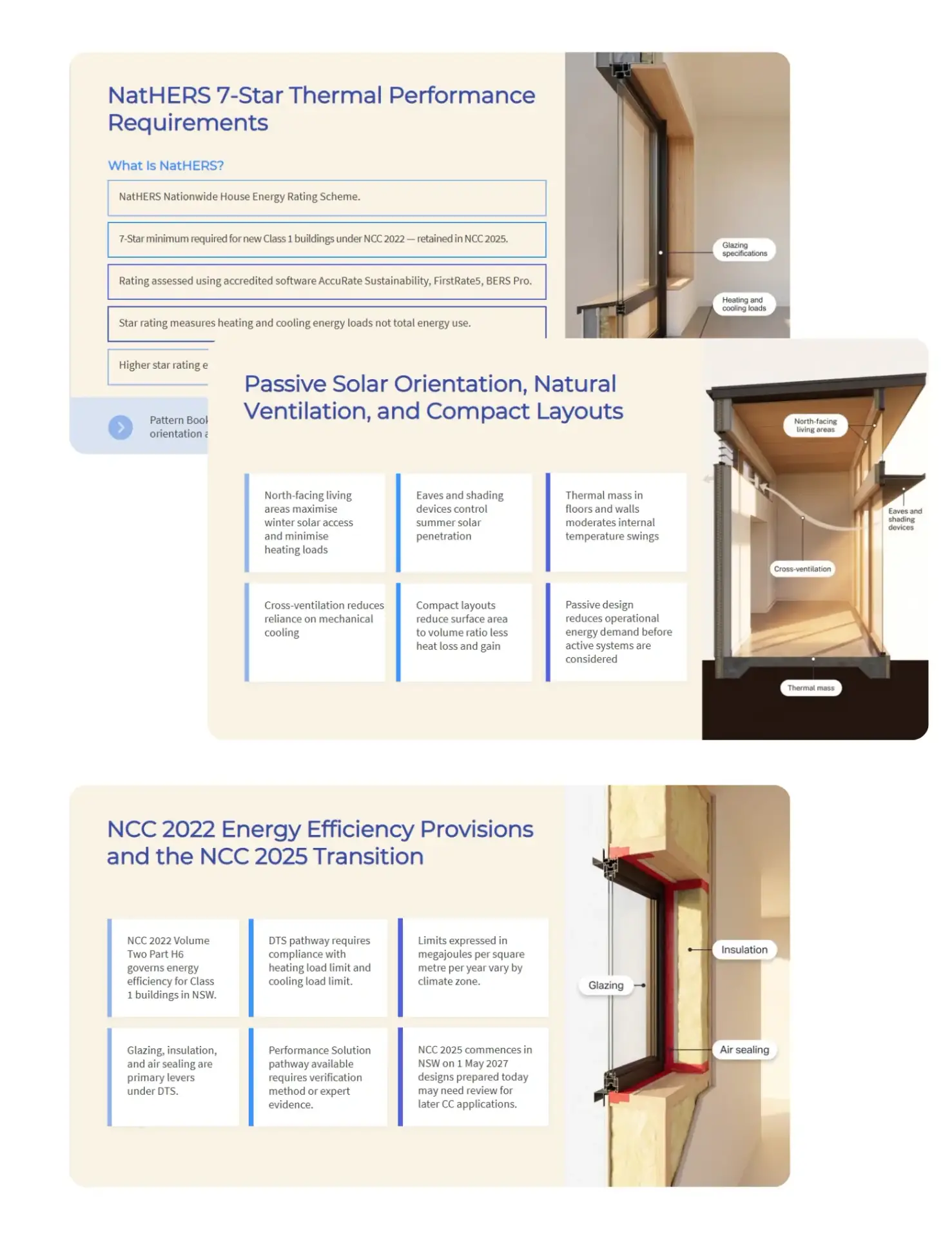
Building envelope performance, condensation risk, NatHERS coordination, energy compliance documentation |
Building science, compliance documentation, energy assessment coordination, risk management, residential performance outcomes. |
|
Building Designers |
Documentation, design responsibility, NCC compliance, scope definition, consultant coordination |
Residential design compliance, liability management, documentation quality, handover processes, certification readiness. |
|
NSCA 2021 (Architects) |
PC6, PC12, PC16, PC13, PC47 |
PC6 (Reporting and varying scope of services) is directly addressed through Module 4, which focuses on defining scope, recording responsibilities, managing handovers, and preventing liability arising from unclear service boundaries. PC12 (Building codes, standards and planning controls) is central to the course, as participants analyse NCC 2025 residential compliance requirements and understand how compliance gaps emerge when code obligations are not properly addressed. PC16 (Risk management and mitigation) is a core theme throughout the course, with a strong focus on identifying professional risk, understanding liability pathways, and applying strategies to contain exposure. PC13 (Documentation processes facilitating project delivery) is highly relevant because the course repeatedly demonstrates how documentation records, compliance evidence, and project information management influence responsibility and certification outcomes. PC47 (Accurate and coordinated project documentation) aligns with the emphasis on ensuring documentation accurately reflects compliance requirements, energy modelling assumptions, condensation provisions, inspections, and handover responsibilities, as documentation quality is presented as the primary mechanism for managing professional risk. |
|
Engineers Australia (Stage 2) |
Risk assessment, compliance management, professional accountability, building systems coordination |
Risk identification, compliance verification, documentation controls, interdisciplinary coordination, professional responsibility. |
|
Licensed Builders (State CPD) |
Construction compliance, inspection hold points, documentation interpretation, defects prevention |
Construction compliance, site implementation, inspection readiness, moisture management, responsibility transfer, defect avoidance. |
|
Building Surveyors |
Permit assessment, certification processes, inspections, occupancy approvals |
Compliance verification, documentation review, certification pathways, identifying unresolved compliance gaps. |
|
Urban Planners & Landscape Architects |
Accessibility and livable housing interfaces, regulatory compliance awareness |
Understanding NCC impacts on residential projects, accessibility requirements, consultant coordination. |
This session is designed for

Architects

Building Designers

Building Surveyors

Licensed Builders

Compliance Consultants
What’s Included
This course examines how compliance gaps develop in residential projects and why they can become significant sources of professional risk for architects and building designers. It explores the NCC 2025 residential provisions that require careful coordination between design, documentation, product selection, and construction, highlighting areas where overlooked requirements can create downstream consequences. Participants will follow the lifecycle of a compliance issue from design and certification through to occupancy and post-handover disputes, gaining insight into how defects and compliance concerns are investigated and how responsibility is determined. The course also examines common project vulnerabilities, including undocumented assumptions, unclear scope boundaries, coordination failures, and unrecorded changes. Through practical examples and case studies, participants will learn how effective documentation, clear responsibility allocation, structured handovers, and consistent project review processes can help reduce risk and strengthen professional outcomes.
Why Take This CPD Session?

Understand how compliance gaps can arise under NCC 2025 and why they present a growing source of professional risk for architects and building designers.
Learn where compliance issues are most likely to surface during certification, construction, occupancy, and post-handover stages, and how responsibility is assessed when they do.
Gain practical strategies for reducing liability through clear scope definition, robust documentation, effective handovers, and stronger project coordination.
Professional development is an investment in career growth and regulatory compliance. Take the next step today.