

Course Content
By the end of this course, participants will be able to clearly distinguish between NatHERS new homes and existing homes assessment streams, including their methodologies, tools, and data collection approaches. They will understand the accreditation pathways, timelines, and training requirements needed to enter the existing homes assessment stream. Participants will be able to evaluate the commercial opportunity created by emerging disclosure policies and assess how it applies to their own practice. They will also be equipped to develop practical strategies for integrating existing homes assessments into their workflow. Finally, they will be able to prepare their practice with appropriate documentation, client communication, and operational planning to support this transition.
Learning Outcomes
This ensures that CPD efforts align with professional regulatory requirements.
This CPD provides general guidance on professional responsibilities and documentation practices. It does not constitute legal advice or replace project-specific contractual or statutory obligations.
Compliance and Accreditation
|
Framework/Body |
Relevant Sections |
Focus Areas |
|
National Construction Code (NCC 2022) |
Energy efficiency provisions (Volume Two), compliance pathways, performance-based assessment context |
Relationship between NatHERS ratings and NCC compliance; distinction between new homes regulatory compliance vs existing homes non-compliance assessments; understanding limitations of NCC applicability to existing dwellings |
|
NatHERS Protocols |
NatHERS Administrative Protocols; Existing Homes Expansion Framework; AccuRate Enterprise methodology |
Parallel assessment streams (new vs existing homes); site-based data collection; observational inputs; use of defaults; accreditation pathways and competency requirements |
|
ABSA CPD Competency Area |
Energy assessment practice; professional conduct; data collection and modelling |
Transition from plan-based to site-based assessment; competency in observational data collection; risk management through assumptions; maintaining consistency across assessors |
|
Building Designers |
Performance-based design considerations; energy efficiency integration |
Understanding how existing homes ratings inform retrofit and upgrade strategies; limitations of documentation; interpreting built form performance |
|
NSCA 2021 (Architects) |
PC1, PC12, PC28, PC31 |
Environmental performance assessment of existing buildings; integration of sustainability knowledge; application of professional judgement under uncertainty; understanding regulatory vs non-regulatory frameworks |
|
Engineers Australia (Stage 2) |
Competency areas related to sustainability, data analysis, and professional judgement |
Building performance evaluation; interpreting incomplete data sets; applying engineering judgement in real-world conditions; lifecycle thinking in existing assets |
|
Licensed Builders (State CPD) |
Building performance, retrofit implications, regulatory awareness |
Understanding how ratings influence renovation decisions; interaction between existing conditions and upgrade pathways; site-based inspection awareness |
|
Building Surveyors |
Compliance assessment frameworks; performance solutions; existing building evaluation |
Distinction between regulatory compliance (new homes) and advisory ratings (existing homes); documentation limitations; evidence-based assessment vs assumptions |
|
Urban Planners & Landscape Architects |
Policy context; sustainability frameworks; built environment performance |
Link between disclosure policy and planning outcomes; role of energy ratings in property transactions; broader sustainability and housing policy implications |
This session is designed for

Energy Assessors

Architects

Building Designers

Residential Builders

Building Surveyors
What’s Included
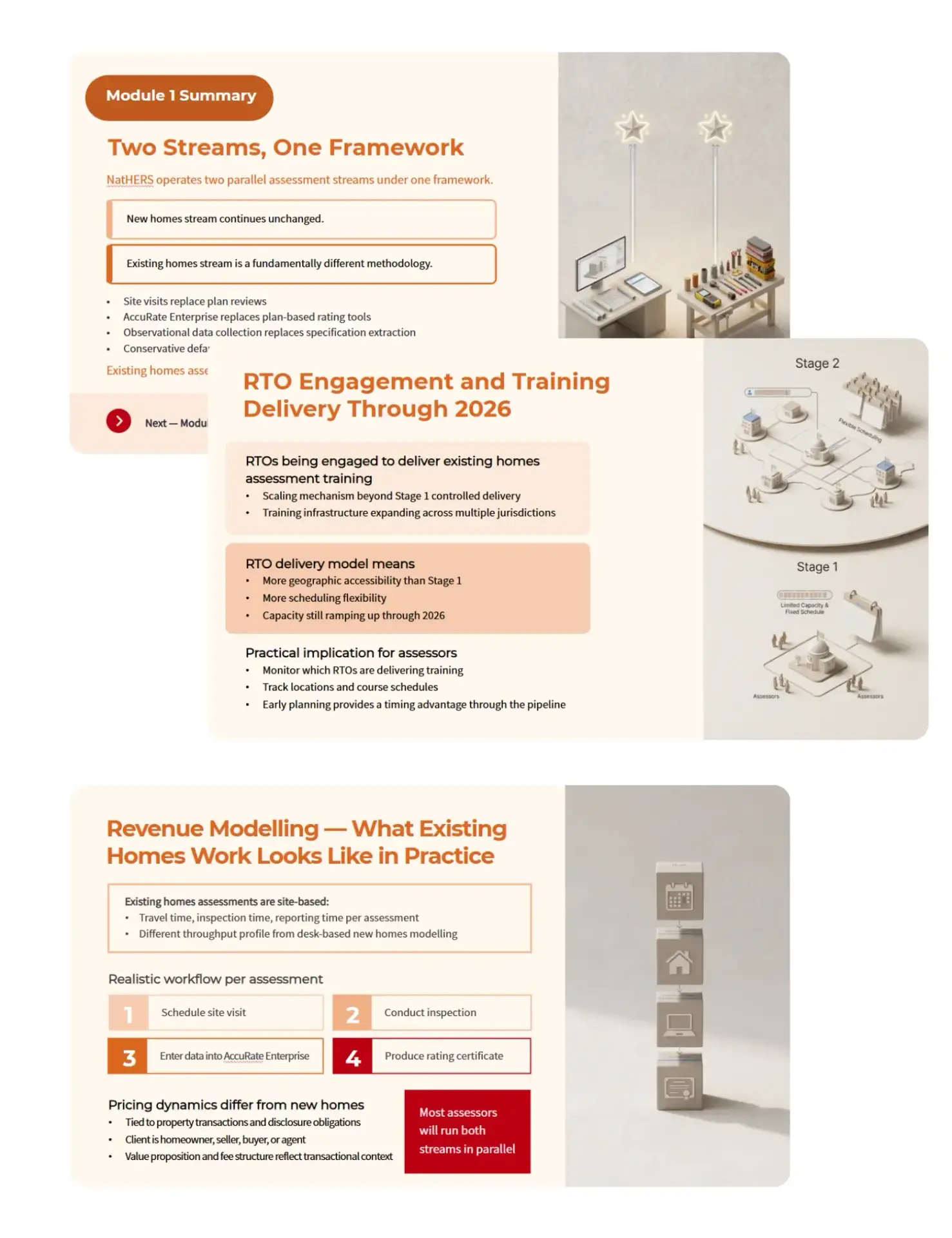
This course examines the expansion of the NatHERS framework to include existing homes assessment and how it operates alongside the established new homes stream. It explores the differences in methodology, tools, and data collection, particularly the shift from plan-based to site-based assessment. The course also examines accreditation pathways, training timelines, and the transition from existing programs such as the Residential Efficiency Scorecard. In addition, it looks at the commercial landscape, including demand driven by disclosure policies and the supply gap of accredited assessors. Finally, it examines the practical steps required to prepare and position a practice for this emerging area of work.
Why Take This CPD Session?

Understand a major shift in the NatHERS framework and how it impacts your role as an energy assessor.
Identify and prepare for new accreditation pathways and emerging market opportunities in existing homes assessment.
Gain practical strategies to adapt your workflow, documentation, and client communication for this new assessment stream.
Professional development is an investment in career growth and regulatory compliance. Take the next step today.