

Course Content
By the end of this session, you will be able to identify and address the unique challenges involved in modelling Class 2 apartments under the NatHERS and NCC 2022 frameworks. You’ll understand how to accurately represent shared construction elements, complex zoning, and fixed appliance systems in multi-residential buildings. The session will also teach you when and how to apply the central hot water system proxy, and when its use is inappropriate. Additionally, you’ll gain the skills to prepare thorough compliance documentation, including evidence of suitability and proxy justifications. This will ensure your assessments are both accurate and fully compliant with regulatory standards.
Learning Outcomes
This ensures that CPD efforts align with professional regulatory requirements.
This CPD provides general guidance on professional responsibilities and documentation practices. It does not constitute legal advice or replace project-specific contractual or statutory obligations.
Compliance and Accreditation
|
Framework/Body |
Relevant Sections |
Focus Areas |
|
National Construction Code (NCC 2022) |
Volume One, Section J; Evidence of Suitability (A5G2–A5G4); Spec 42 |
Class 2 thermal and Whole-of-Home compliance; central system proxy use; documentation standards; zoning and appliance inclusion per NCC mandates |
|
NatHERS Protocols |
Technical Note v20241023, especially Clause 12.10 |
Whole-of-Home modelling; default appliance profiles; proxy modelling rules for central hot water systems; zoning; software input integrity |
|
ABSA CPD Competency Area |
Technical Modelling; Regulatory Knowledge; Reporting |
Accurate use of software defaults; fixed appliance inclusion; documentation of assumptions; zoning and layout variance management |
|
Building Designers |
Energy Efficiency Modelling; Compliance Reporting |
Compliance with NCC and NatHERS for Class 2; proxy selection rationale; WOH appliance documentation; assessor-client communication |
|
NSCA 2021 (Architects) |
PC20, PC21, PC28, PC31, PC33, PC45 |
Thermal modelling principles; statutory planning and environmental performance; project documentation quality; star band limitations |
|
Engineers Australia (Stage 2) |
Technical Expertise; Stakeholder Engagement; Systems Thinking |
Multi-system interaction (HVAC, hot water, electrical); proxy use and performance metrics; design coordination with architectural and compliance teams |
|
Licensed Builders (State CPD) |
Documentation Compliance; Appliance Inclusion |
Interpretation of reports; understanding NCC Volume One Section J; assessing design integration and proxy system impacts on energy use |
|
Building Surveyors |
NCC Volume One Section J; Verification Methods |
Evidence of suitability; thermal and WOH compliance evidence; identifying modelled assumptions versus actual construction plans |
This session is designed for

Energy Assessors

Architects

Building Designers

Building Surveyors

Sustainability Consultants
What’s Included
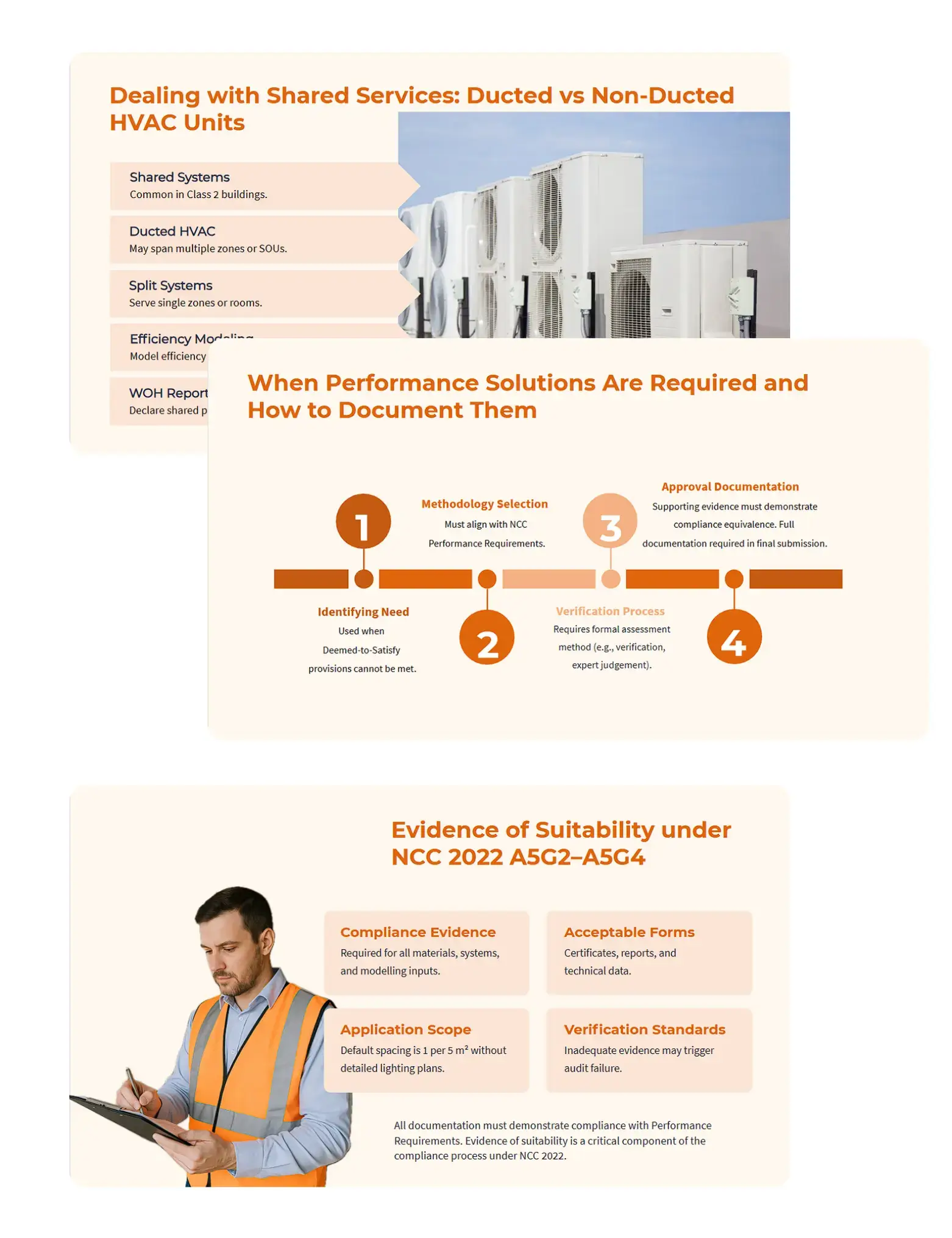
This course covers the key principles and practical steps for accurately modelling Class 2 multi-residential buildings under NatHERS and NCC 2022. It addresses the unique thermal performance challenges of shared walls, repeated layouts, and zoning in apartment settings. The course explains how to use the central hot water system proxy, including when it is appropriate and how to document its use. It also provides guidance on modelling fixed appliances and preparing complete, compliant documentation for regulatory approval.
Why Take This CPD Session?

Enhance your expertise in modelling complex Class 2 apartment buildings using the latest NatHERS and NCC 2022 requirements.
Avoid common compliance pitfalls by learning when and how to apply proxies, performance solutions, and accurate zoning techniques.
Improve assessment quality and audit readiness with practical guidance on documentation, stakeholder coordination, and Whole-of-Home modelling.
Professional development is an investment in career growth and regulatory compliance. Take the next step today.