

Course Content
By the end of this course, participants will be able to design lighting solutions that respect and protect heritage fabric while meeting modern functional needs. They will understand how to select appropriate colour temperatures and fittings that preserve the original character of historic materials. Participants will be able to apply layered lighting techniques to highlight architectural features without causing visual harm. They will also be equipped to identify and minimise risks associated with lighting interventions in heritage buildings. In addition, they will be able to navigate heritage controls and NCC requirements to deliver compliant and well considered lighting designs.
Learning Outcomes
This ensures that CPD efforts align with professional regulatory requirements.
This CPD provides general guidance on professional responsibilities and documentation practices. It does not constitute legal advice or replace project-specific contractual or statutory obligations.
Compliance and Accreditation
|
Framework/Body |
Relevant Sections |
Focus Areas |
|
National Construction Code (NCC 2022) |
Vol 1/Vol 2: Performance Requirements for safe movement and access/egress; provisions impacting lighting outcomes in existing buildings; energy efficiency provisions affecting lighting upgrades; Performance Solution pathway where Deemed-to-Satisfy is constrained by heritage controls |
Balancing heritage constraints with statutory compliance; evidence of suitability for luminaires and installation methods; glare/contrast management supporting amenity and safe movement; energy-efficient upgrades without fabric harm |
|
NSCA 2021 (Architects) |
PC12, PC28, PC31, PC33, PC45 |
Evaluating design options against heritage value and stakeholder needs; integrating lighting systems into design intent; documenting compliant, coordinated solutions |
|
Building Designers |
NCC compliance in alterations/fit-outs; detailing for minimal intervention; documentation for approvals in heritage contexts |
Non-invasive/reversible retrofit strategies; fixture selection appropriate to historic fabric; coordination with consultants and approvals |
|
Building Surveyors |
Assessment of compliance pathways (DTS vs Performance Solution); review of documentation/evidence for proposed lighting solutions |
Interpreting NCC obligations for upgrades; assessing risk, suitability evidence, and safety/amenity impacts |
|
Urban Planners & Landscape Architects |
Heritage planning controls/overlays affecting lighting upgrades; approval pathways and documentation expectations |
Planning/heritage overlay impacts on lighting scope; aligning lighting intent with conservation outcomes |
This session is designed for

Architects

Building Designers

Lighting Designers

Heritage Consultants

Building Surveyors / Certifiers
What’s Included
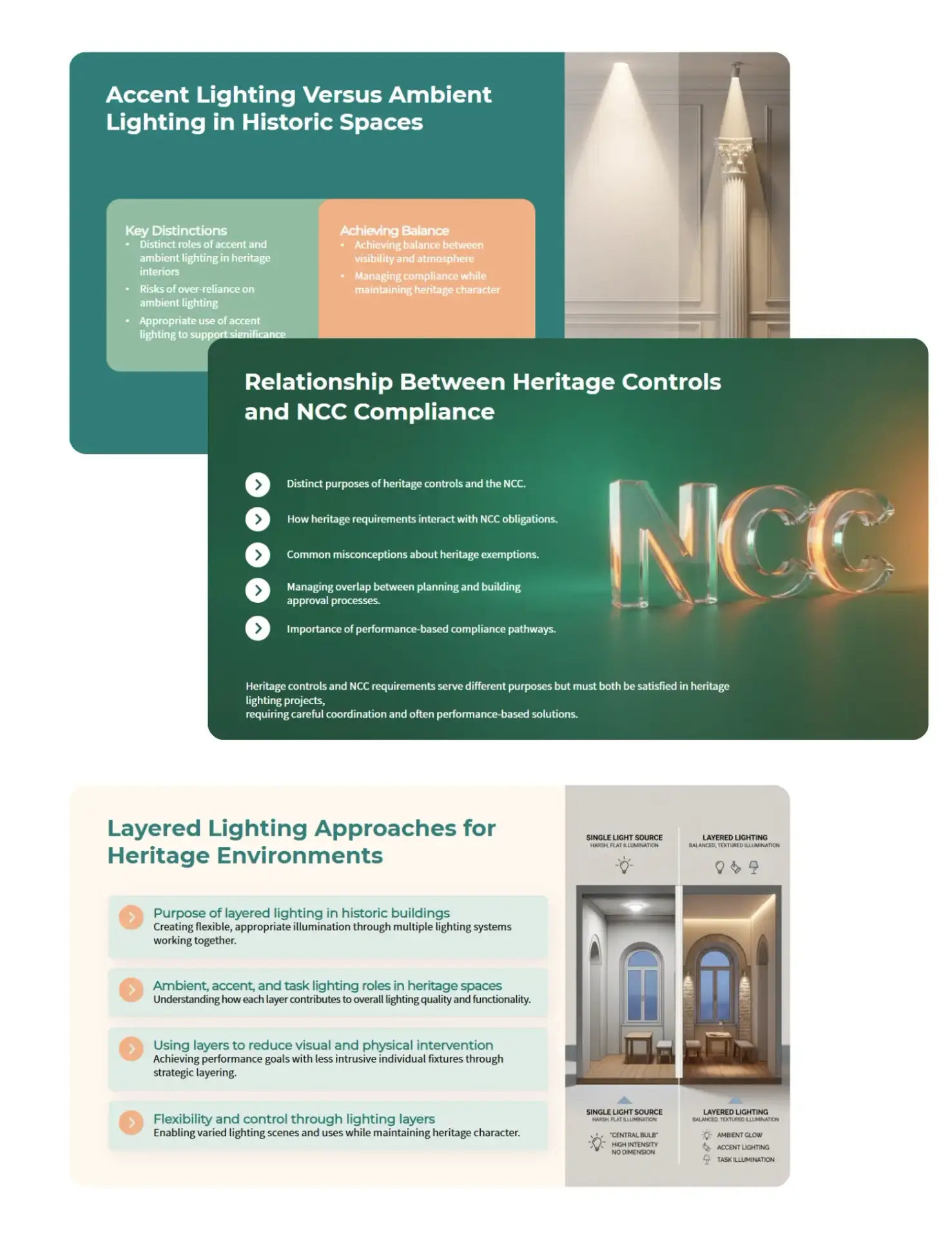
This course examines the relationship between lighting design and heritage conservation, focusing on how modern interventions can influence the visual and material integrity of historic buildings. It explores the technical, aesthetic, and regulatory challenges involved in upgrading lighting within sensitive environments. The content also investigates how lighting affects perception of space, texture, and architectural detail in heritage contexts. In addition, it reviews practical design approaches that align contemporary performance expectations with conservation principles. The course further considers the role of collaboration, documentation, and approval processes in delivering successful heritage lighting outcomes.
Why Take This CPD Session?

Gain practical knowledge to design lighting that enhances heritage buildings without damaging their character.
Improve your ability to balance conservation requirements with modern lighting performance and compliance.
Build confidence in navigating heritage regulations and delivering well considered, approval ready lighting solutions.
Professional development is an investment in career growth and regulatory compliance. Take the next step today.