

Course Content
By the end of this course, you will be able to explain the national Home Energy Rating Disclosure Framework, including its scope, purpose, and current implementation status. You will be able to analyse how energy rating certificates are used in property sales, tenancy agreements, and lending, and identify where professional liability risks arise. You will be able to apply clear documentation standards, including scope limitation and currency statements, to protect your certificates in transactional contexts. You will be able to evaluate the differences in disclosure requirements across jurisdictions and understand the pathway toward mandatory implementation. You will also be able to manage your assessment records and documentation in a way that supports and defends your work if it is later relied upon or challenged.
Learning Outcomes
This ensures that CPD efforts align with professional regulatory requirements.
This CPD provides general guidance on professional responsibilities and documentation practices. It does not constitute legal advice or replace project-specific contractual or statutory obligation
Compliance and Accreditation
|
Framework/Body |
Relevant Sections |
Focus Areas |
|
National Construction Code (NCC 2022) |
Volume One & Two – Energy Efficiency Provisions; Compliance pathways; Referenced standards |
Role of NatHERS within NCC compliance; distinction between design-stage compliance vs as-built performance; limitations of certificates when used beyond approval context |
|
NatHERS Protocols |
NatHERS Administrative & Technical Notes; Certificate generation and use; Assessor accreditation requirements |
Certificate accuracy, assumptions, and modelling limitations; correct use of NatHERS outputs; managing gaps between modelled and constructed outcomes; assessor responsibilities |
|
ABSA CPD Competency Area |
Risk Management; Documentation & Quality Assurance; Professional Practice |
Managing professional liability from third-party reliance; documentation standards (scope limitation, currency statements); file retention and audit preparedness |
|
Building Designers |
NCC compliance pathways; Energy efficiency integration; Documentation practices |
Understanding how energy ratings inform design and approvals; risks when certificates are reused in transactions; coordination with assessors |
|
NSCA 2021 (Architects) |
PC1, PC12, PC16, PC55 |
PC1 — Professional conduct: understanding how assessor certificates will be relied upon in property transactions and the professional liability this creates. |
|
Engineers Australia (Stage 2) |
Risk, responsibility and accountability; Professional judgement; Compliance and documentation |
Managing risk where outputs inform financial or legal decisions; ensuring accuracy and traceability of technical documentation; interdisciplinary coordination |
|
Licensed Builders (State CPD) |
Construction compliance; As-built verification; Documentation integrity |
Gap between design intent and constructed outcome; implications for reliance on design-stage certificates; coordination with assessors and certifiers |
|
Building Surveyors |
Compliance assessment; Certification processes; Regulatory interpretation |
Distinction between compliance certification and disclosure use; understanding limitations of documentation; reliance risk in statutory vs non-statutory contexts |
|
Urban Planners & Landscape Architects |
Policy implementation; Sustainability frameworks; Built environment performance |
Role of disclosure in market transformation; integration with planning policy and sustainability outcomes; understanding energy performance as a planning signal |
This session is designed for

Energy Assessors

Architects

Building Designers

Building Surveyors

Builders
What’s Included
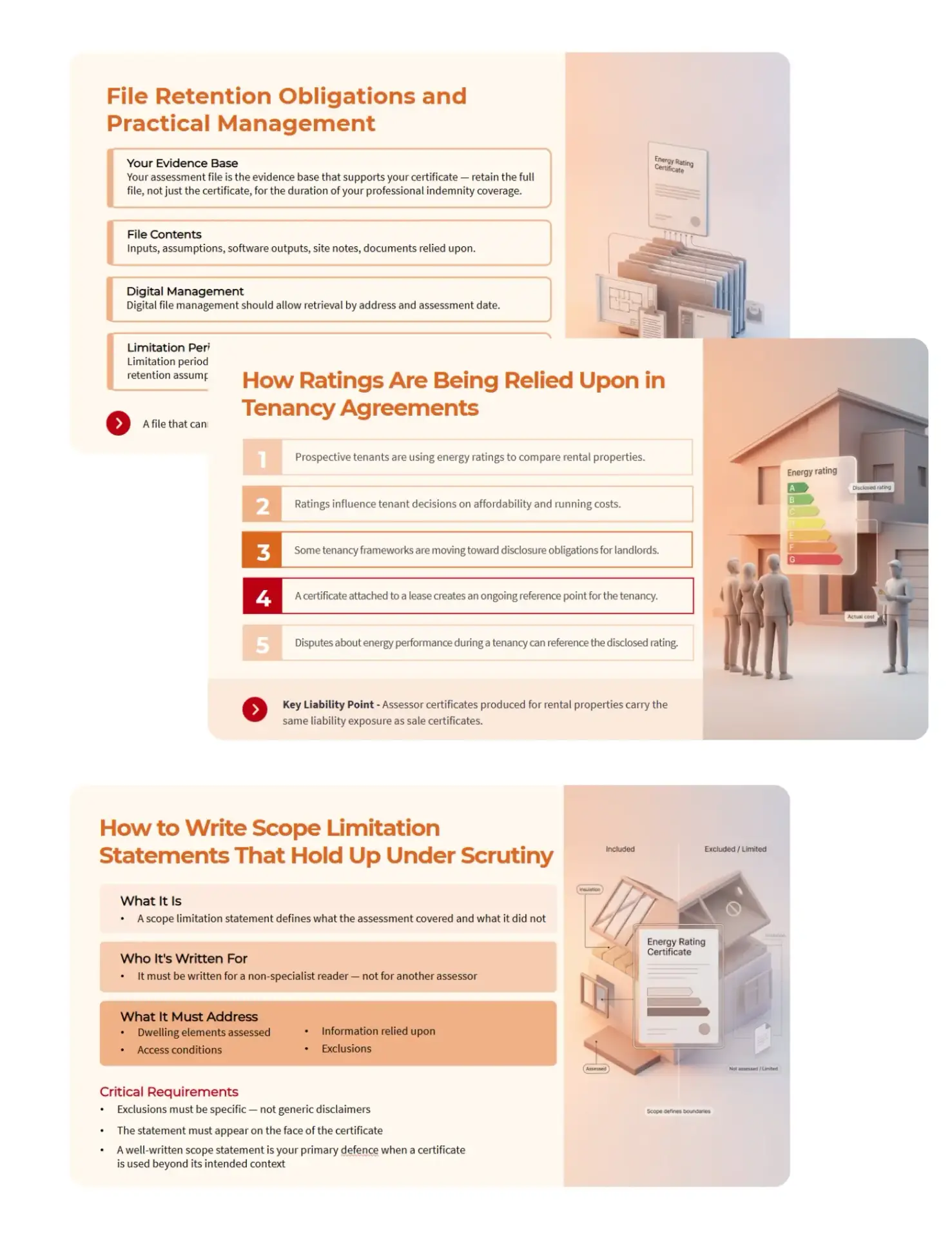
This course examines the national Home Energy Rating Disclosure Framework and what it means for accredited energy assessors working under NatHERS, NABERS, and Section J. It covers how the mandatory disclosure landscape is evolving across Australia, with the ACT scheme already operational, a NSW pilot underway, and a national rollout in development. The course analyses how assessor certificates are increasingly used as transactional documents in property sales, tenancy agreements, and lending assessments, and the professional liability this creates. It also details the documentation standards assessors must apply to protect themselves, including scope limitation statements, currency declarations, and file retention practices. Finally, it evaluates the jurisdictional picture across all states and territories and maps the realistic pathway from voluntary to mandatory disclosure nationwide.
Why Take This CPD Session?

Understand how your certificates are already being used in property transactions, tenancy agreements, and lending assessments beyond their original compliance purpose.
Improve your ability to document assessments in ways that protect your professional position when ratings are relied upon in sales, leasing, or lending contexts.
Strengthen your confidence in navigating the jurisdictional disclosure landscape, from the operational ACT scheme through to the pathway toward national mandatory rollout.
Professional development is an investment in career growth and regulatory compliance. Take the next step today.