

Course Content
By the end of this course, you will understand how NatHERS assessments work and how early design decisions influence both the thermal star rating and the Whole-of-Home result. You will recognise the key design strategies that improve energy performance, including orientation, glazing, shading, insulation, zoning, and services selection. You will also understand how accurate documentation and effective collaboration with NatHERS assessors can reduce clarification requests, re-rates, and project delays. Most importantly, you will gain the knowledge to incorporate energy efficiency into your design process from the outset, helping deliver compliant, high-performing homes with greater confidence.
Learning Outcomes
This ensures that CPD efforts align with professional regulatory requirements.
This CPD provides general guidance on professional responsibilities and documentation practices. It does not constitute legal advice or replace project-specific contractual or statutory obligations.
Compliance and Accreditation
|
Framework/Body |
Relevant Sections |
Focus Areas |
|
National Construction Code (NCC 2022) |
Volume Two – Housing Provisions; Energy Efficiency; Seven-Star Thermal Performance; Whole-of-Home requirements |
Designing to achieve NCC energy efficiency compliance, fabric-first design, glazing, orientation, insulation, services integration, documentation supporting compliance. |
|
NatHERS Protocols |
Accredited Assessment Process; Thermal Performance; Whole-of-Home Rating; Climate Zones; Assessor documentation |
Early design decisions influencing ratings, assessor collaboration, modelling inputs, glazing performance, zoning, shading, documentation quality, avoiding re-rates. |
|
ABSA CPD Competency Area |
Building Fabric; Thermal Performance; Whole-of-Home; Documentation Quality; Client & Industry Collaboration |
Understanding rating methodology, improving design outcomes before assessment, reducing assessment revisions, interpreting design impacts on energy performance. |
|
Building Designers |
Residential design; passive solar design; documentation; energy efficiency integration |
Orientation, glazing, shading, insulation, zoning, detailing, specification development and preparing assessor-ready documentation. |
|
NSCA 2021 (Architects) |
PC20, PC28, PC31, PC33, PC47 |
PC28 The course is fundamentally centred on building science, thermal performance, glazing, insulation, air-sealing, thermal bridging, shading, and passive design strategies that optimise building performance during conceptual design. This aligns directly with PC28 (building sciences, environmental sciences and design performance). |
|
Licensed Builders (State CPD) |
Residential construction; building fabric; insulation; air sealing; thermal bridging; construction quality |
Constructing buildings consistent with NatHERS assumptions, understanding documentation requirements, reducing compliance issues during construction. |
|
Building Surveyors |
NCC energy efficiency compliance; residential approvals; documentation review |
Reviewing documentation supporting NatHERS compliance, identifying documentation deficiencies, understanding Whole-of-Home compliance pathway. |
This session is designed for

Architects

Building Designers

NatHERS Energy Assessors

Residential
Builders

Building Surveyors
What’s Included
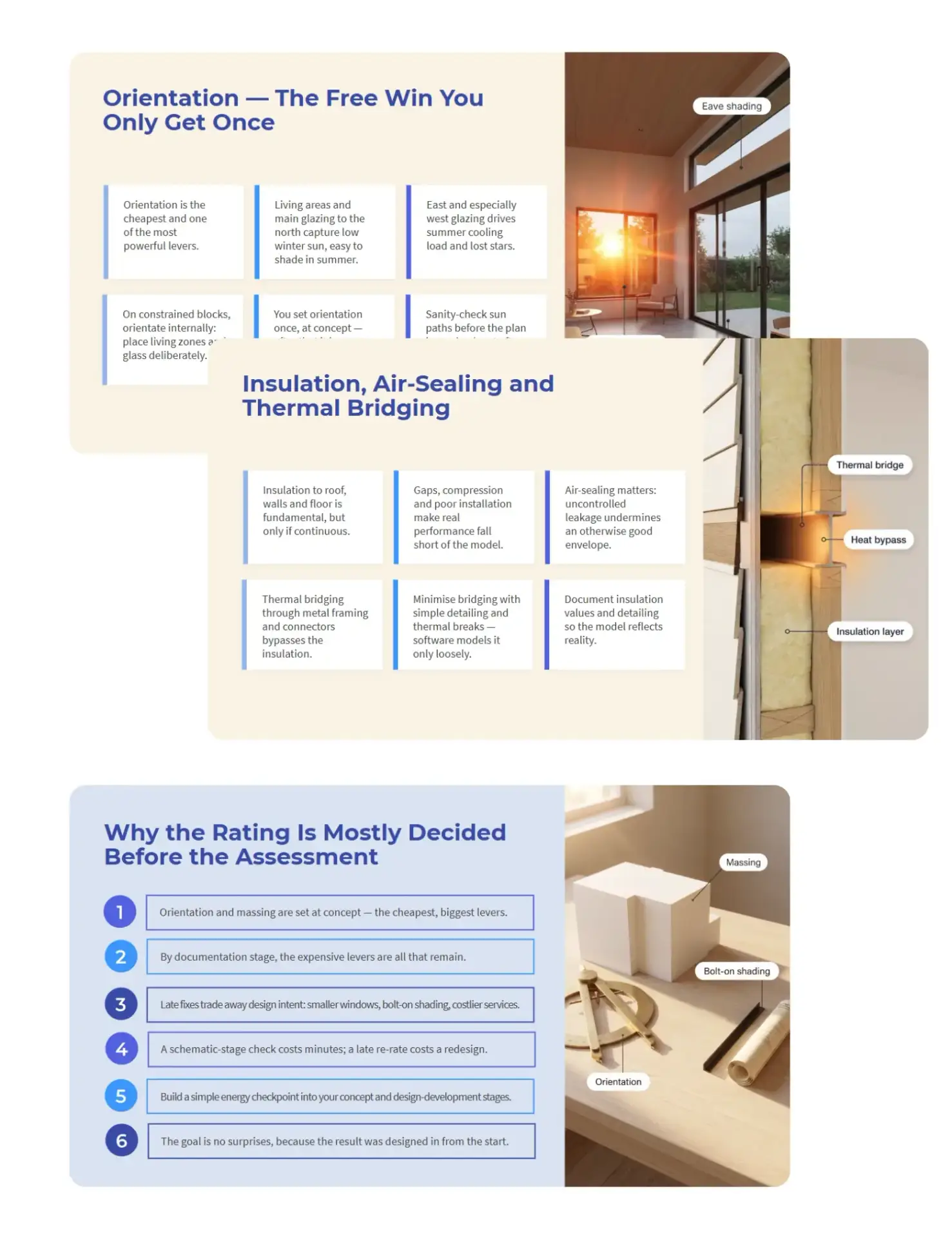
This course examines how energy performance is shaped throughout the residential design process, from early concept planning through to assessor handover. It explores the relationship between building fabric, fixed services, and NatHERS compliance, highlighting the practical decisions that have the greatest impact on project outcomes. Participants will also examine common documentation issues, design changes, and coordination challenges that lead to delays, rework, and reassessment. The course concludes with practical workflows and quality assurance strategies that help designers achieve smoother approvals and more predictable energy compliance outcomes.
Why Take This CPD Session?

Learn practical design strategies that improve NatHERS outcomes before formal assessment begins.
Reduce costly redesigns, clarification requests, and approval delays through better documentation and coordination.
Deliver more energy-efficient, compliant residential designs with greater confidence and fewer re-rates.
Professional development is an investment in career growth and regulatory compliance. Take the next step today.