

Course Content
By the end of this course, you will be able to identify and manage conflicts of interest in architectural practice while maintaining professional independence. You will understand the scope of your duty of care and how it applies to clients, building occupants, future owners, and the wider community. You will be able to apply principles of honesty, accuracy, and transparency to documentation, specifications, and professional representations. You will understand the ethical and legal responsibilities associated with certification, inspections, and compliance statements. You will also be equipped with practical strategies for creating defensible records, making ethical decisions under pressure, and reducing professional risk throughout the project lifecycle.
Learning Outcomes
This ensures that CPD efforts align with professional regulatory requirements.
This CPD provides general guidance on professional responsibilities and documentation practices. It does not constitute legal advice or replace project-specific contractual or statutory obligations.
Compliance and Accreditation
|
Framework/Body |
Relevant Sections |
Focus Areas |
|
National Construction Code (NCC 2022) |
Administrative requirements relating to certification and compliance statements; application of the adopted NCC edition in each jurisdiction |
Ethical certification, compliance statements, professional responsibility when certifying design documentation |
|
NSCA 2021 (Architects) |
PC1, PC7, PC15, PC47, PC57 |
PC1 is directly applicable because the course focuses on architects’ regulatory obligations, professional codes of conduct, ethics, continuing professional responsibilities, and legal compliance. PC7 aligns with the emphasis on honest communication with clients, authorities and stakeholders, particularly regarding conflicts of interest, disclosures, and professional advice. PC15 is highly relevant as the course centres on ethical obligations, professional integrity, honesty, and legal responsibilities throughout architectural practice. PC47 is directly addressed through extensive coverage of accurate, truthful, complete and defensible documentation, specifications, representations and certification records. PC57 applies because the course examines impartial certification, contract administration responsibilities, sign-off obligations, inspections, and maintaining defensible certification and compliance records during project delivery. |
|
Building Designers |
Professional ethics, documentation integrity, duty of care principles applicable to design practice |
Ethical practice, client responsibilities, documentation accuracy, professional accountability |
|
Building Surveyors |
Professional interactions with architects during certification and compliance processes |
Certification boundaries, reliance on documentation, professional responsibilities, statutory certification interface |
This session is designed for

Architects

Registered Architects

Architectural Practice Directors

Architectural Graduates

Design Managers
What’s Included
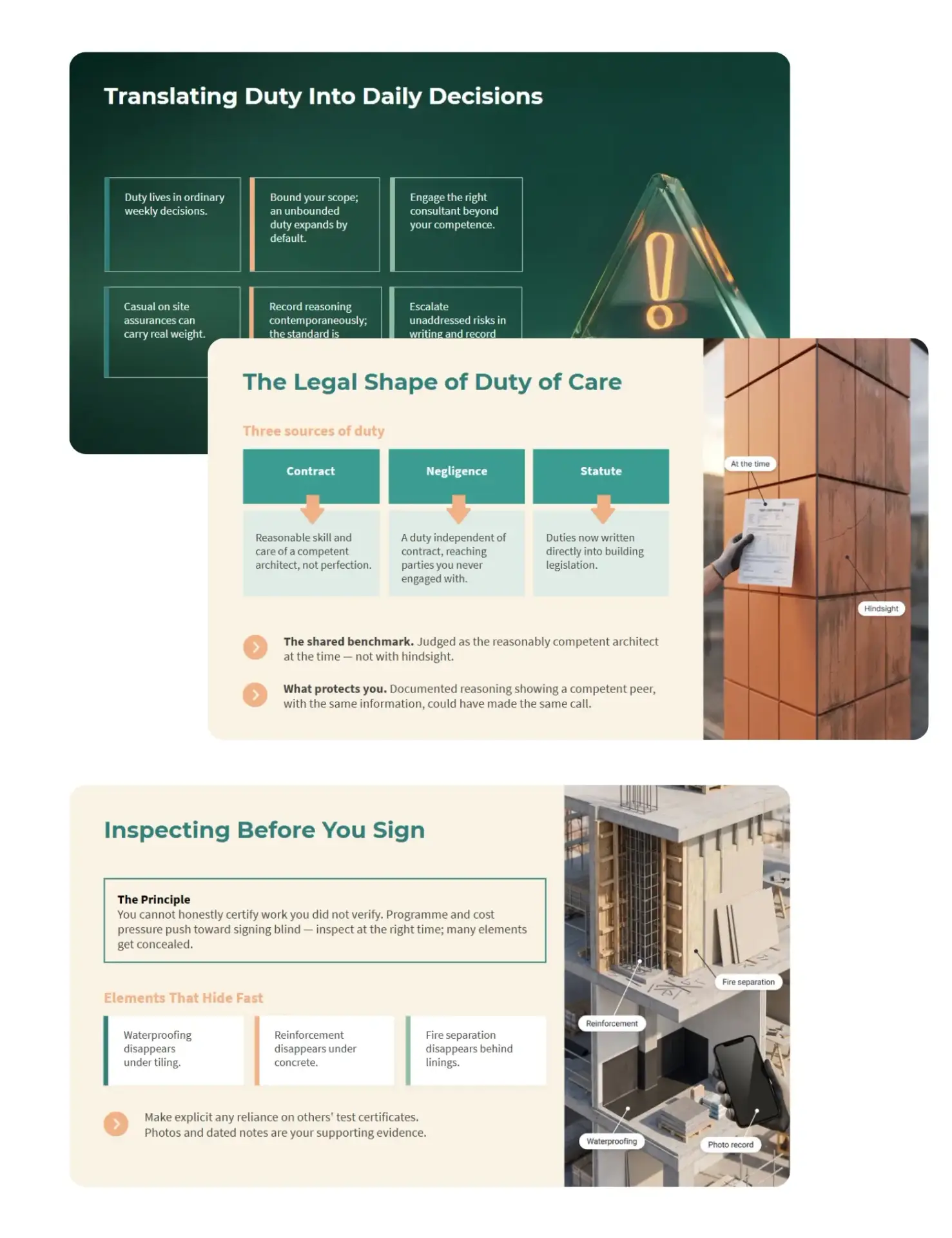
This course examines the ethical obligations that underpin architectural practice, focusing on conflicts of interest, duty of care, honesty in documentation, and integrity in certification. It looks at how personal or financial interests can compromise professional judgement, and sets out disclosure and management strategies that protect both the architect and the client. The course explains the legal shape of duty of care, who it extends to, and how everyday design and documentation decisions carry liability exposure. It also addresses the accuracy required in specifications, representations to clients and authorities, and as built records, along with the boundary between design intent and statutory certification. Two case studies ground these principles in situations architects are likely to encounter, including an undisclosed supplier relationship and a compliance statement signed under deadline pressure.
Why Take This CPD Session?

Sharpen your judgement on conflicts of interest, disclosure, and management strategies before commercial pressure turns an ordinary decision into a career risk.
Understand the legal shape of duty of care and how your design and documentation choices directly affect your liability exposure.
Build defensible habits for documentation, specification, and certification, supported by real case studies of undisclosed relationships and deadline driven sign offs.
Professional development is an investment in career growth and regulatory compliance. Take the next step today.