

Course Content
By the end of this course, participants will be able to define and map thermal zones in residential building designs. They will understand how zone boundaries affect heating and cooling performance within a home. Participants will be able to identify common zoning mistakes and assess their impact on NatHERS modelling results. They will also be able to recommend layout adjustments that improve thermal efficiency and compliance outcomes. Finally, they will be able to apply zoning principles in design documentation and energy assessments to support NCC and NatHERS requirements.
Learning Outcomes
This ensures that CPD efforts align with professional regulatory requirements.
This CPD provides general guidance on professional responsibilities and documentation practices. It does not constitute legal advice or replace project-specific contractual or statutory obligations.
Compliance and Accreditation
|
Framework/Body |
Relevant Sections |
Focus Areas |
|
National Construction Code (NCC 2022) |
Volume Two, Section H6; Part A5; Condensation Handbook |
Thermal performance obligations, Whole-of-Home criteria, moisture/condensation risk, and construction compliance |
|
NatHERS Protocols |
Chapter 5 – Zoning; Appendix 2; Combining Zones |
Zoning rules, combining criteria, bedroom complexes, and zone classification accuracy |
|
ABSA CPD Competency Area |
2.3 Thermal Performance; 3.1 Zoning Principles |
Assessing zoning compliance, layout implications, and energy rating performance |
|
Building Designers |
BDAA Guidelines – Thermal Performance Design |
Practical zoning application in building plans; energy-efficient design practices |
|
NSCA 2021 (Architects) |
PC10, PC20, PC26, PC31, PC33, PC45 |
Design planning, performance integration, sustainability principles, moisture, documentation, and modelling |
|
Engineers Australia (Stage 2) |
Performance Evaluation; Technical Expertise; Standards Compliance |
Thermal boundary assessment, system behaviour, and implications for mechanical systems |
|
Licensed Builders (State CPD) |
NSW/QLD CPD Requirements – Energy Efficiency; Condensation Mitigation |
Construction-stage implications of zoning assumptions and compliant detailing |
|
Building Surveyors |
NCC Verification Methods; Evidence of Suitability (A5G2–A5G4) |
Ensuring design assumptions match constructed outcomes; compliance documentation |
This session is designed for

Architects

Energy Assessors

Building Designers

Builders

Building Surveyors
What’s Included
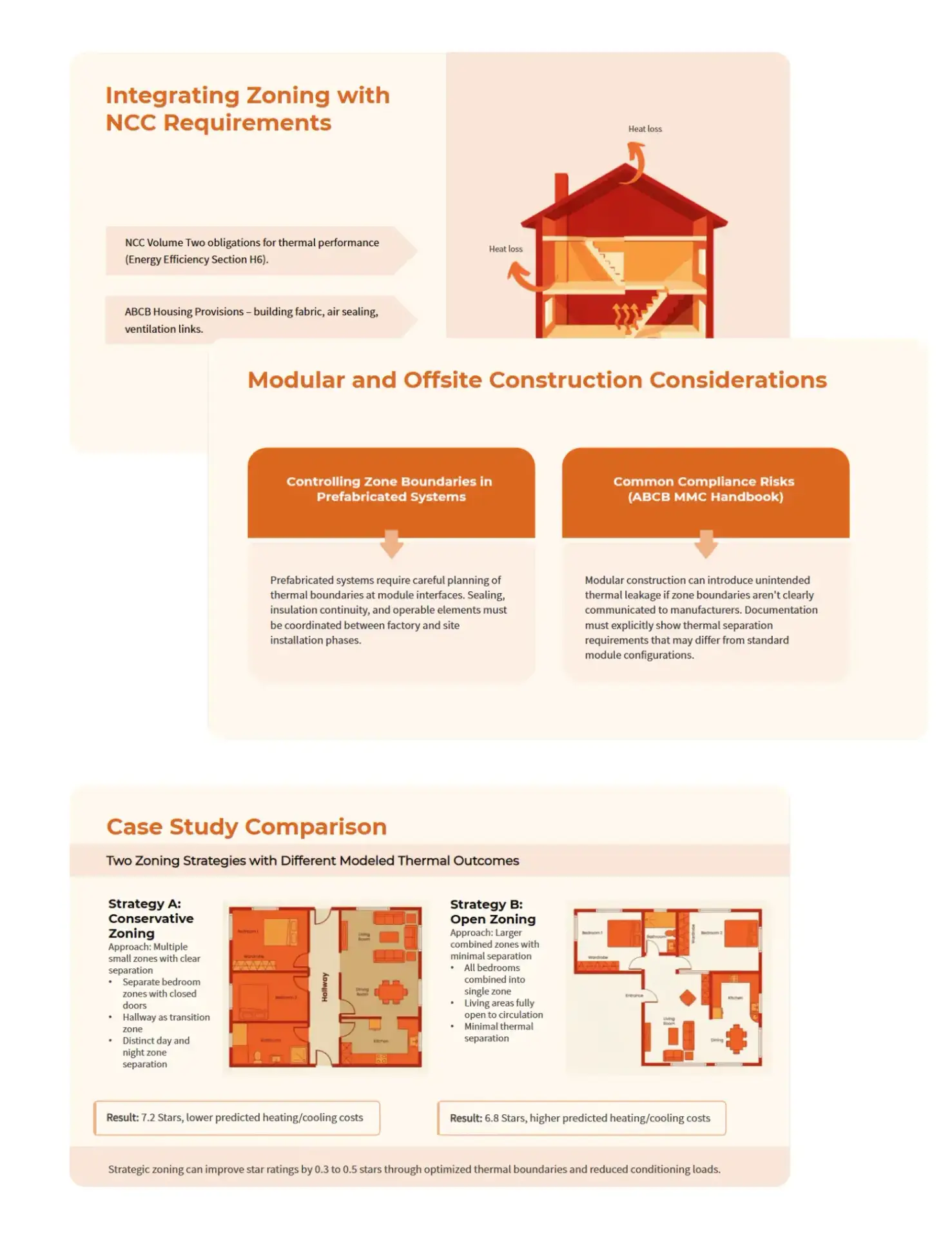
This course examines how internal layouts influence the way heat moves through different parts of a home. It explores how room connections, openings, and circulation spaces shape thermal behaviour and energy demand. The session looks at the relationship between building design decisions and the accuracy of energy performance modelling. It also investigates how zoning choices interact with moisture management and overall building durability. Practical examples are used to demonstrate how small design changes can significantly improve the thermal efficiency of residential buildings.
Why Take This CPD Session?

Gain practical knowledge that helps improve the thermal performance of residential designs.
Learn how to avoid common zoning mistakes that can negatively affect NatHERS results and compliance.
Develop skills to make informed design decisions that support energy efficiency and occupant comfort.
Professional development is an investment in career growth and regulatory compliance. Take the next step today.