

Course Content
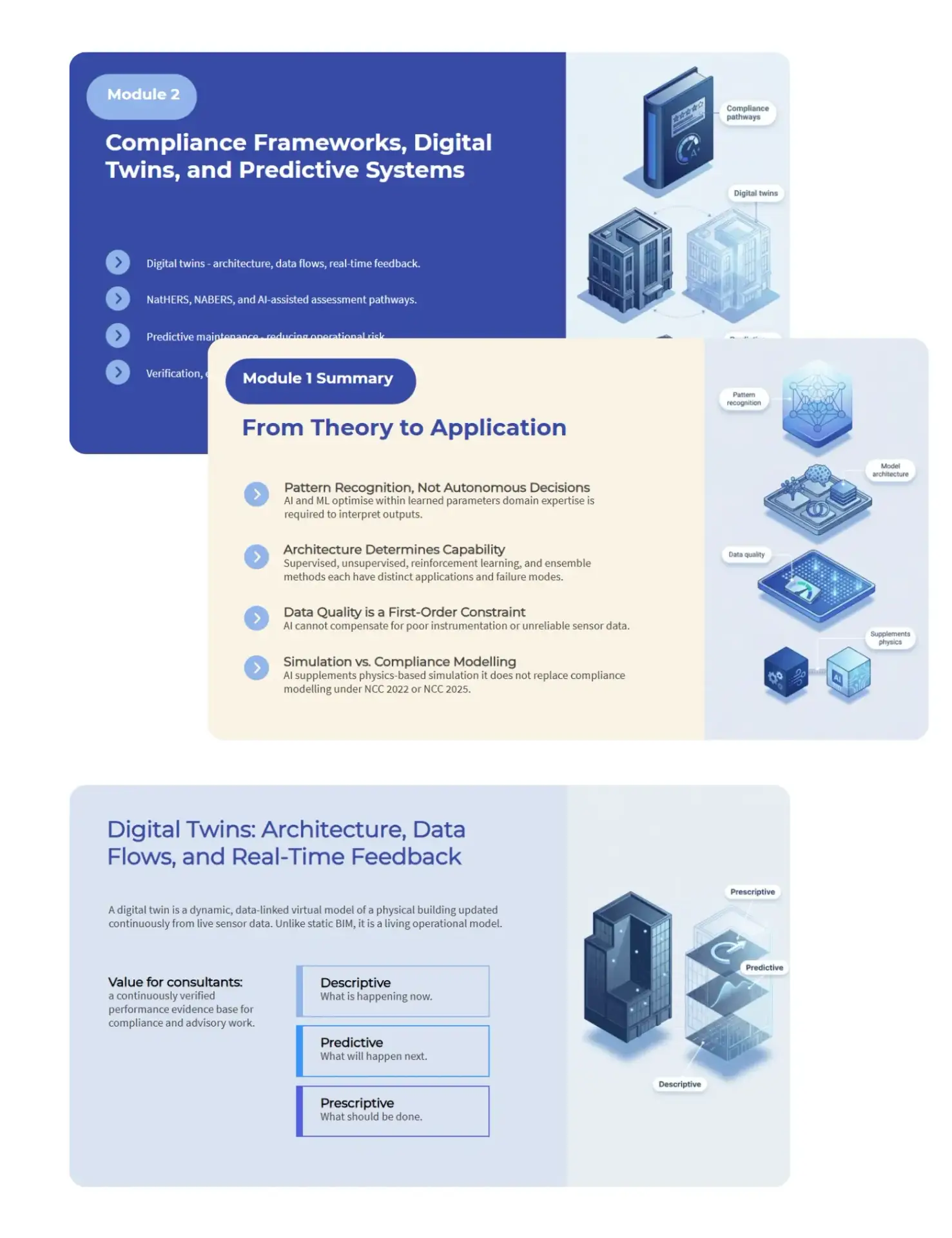
By the end of this course, participants will be able to evaluate how AI and machine learning tools are applied in building performance modelling, energy simulation, and operational optimisation across the Australian built environment. They will understand how AI assisted systems interact with NatHERS, NABERS, and NCC compliance pathways, including the differences between NCC 2022 and NCC 2025 jurisdictions. Participants will also be able to identify and manage key implementation risks such as data governance, cybersecurity, procurement challenges, and AI model failure modes. The course equips professionals with a structured framework for selecting, validating, and integrating AI tools into sustainability consulting practice while maintaining compliance and professional accountability. Participants will also gain practical skills in documenting AI assisted methodologies and communicating AI generated insights clearly and defensibly within client reports and compliance submissions.
Learning Outcomes
This ensures that CPD efforts align with professional regulatory requirements.
This CPD provides general guidance on professional responsibilities and documentation practices. It does not constitute legal advice or replace project-specific contractual or statutory obligations
Compliance and Accreditation
|
Framework/Body |
Relevant Sections |
Focus Areas |
|
National Construction Code (NCC 2022 / NCC 2025) |
Module 2: NatHERS, NABERS, and AI-Assisted Assessment Pathways; Verification, Evidence, and Compliance Documentation for AI Systems; Module 4: Documentation Protocols for AI-Assisted Assessments; Learning Objectives LO2 & LO4 |
AI-assisted performance solutions, JV3 verification pathways, compliance documentation, evidence standards, operational energy optimisation, jurisdictional NCC adoption differences, digital compliance workflows |
|
NatHERS Protocols |
Module 2: NatHERS and AI-Assisted Assessment Pathways; AI-Driven Energy Simulation and Performance Forecasting; Case Study 2 — Machine Learning in Net-Zero Residential Development |
AI-assisted thermal optimisation, Whole-of-Home performance strategy, surrogate modelling, residential energy efficiency modelling, pre-assessment optimisation workflows, accredited simulation limitations |
|
ABSA CPD Competency Area |
Building performance modelling; predictive maintenance; data governance; energy simulation; AI-assisted optimisation; digital twin systems; implementation risk and compliance verification |
Thermal performance assessment, building fabric optimisation, energy modelling literacy, AI-assisted sustainability analysis, evidence-based advisory practice, operational performance analytics |
|
Building Designers |
AI-driven energy simulation and forecasting; Module 4: Practice Application and Documentation; AI-assisted optimisation workflows |
Sustainable design optimisation, design-stage performance modelling, AI integration into residential and commercial design workflows, energy-efficient specification development |
|
NSCA 2021 (Architects) |
PC10, PC12, PC28, PC31, PC33 |
PC10 is directly relevant because the course examines AI-assisted optimisation of building systems, energy efficiency, and operational performance in relation to whole life carbon and sustainability outcomes. PC12 applies through the extensive focus on NCC 2022/NCC 2025 compliance pathways, NatHERS, NABERS, and verification requirements for AI-assisted assessments. PC28 is highly relevant as the course centres on applying building sciences, environmental sciences, and performance modelling knowledge to optimise building outcomes using AI and machine learning tools. PC31 aligns with the course’s emphasis on environmental sustainability, operational energy performance, carbon reduction, and lifecycle performance analysis using predictive systems and digital twins. PC33 is applicable because the course addresses integration and optimisation of environmental systems — including HVAC, energy monitoring, predictive maintenance, and smart building controls — within AI-enabled building performance frameworks. |
|
Engineers Australia (Stage 2) |
Predictive maintenance systems; digital twins; data governance; AI-assisted operational optimisation; cybersecurity and systems integration |
Building services engineering, operational performance analytics, systems optimisation, intelligent building systems, risk and reliability engineering, digital engineering integration |
|
Licensed Builders (State CPD) |
Predictive maintenance; implementation barriers; AI-integrated building systems; documentation and verification protocols |
Smart building delivery, operational risk reduction, construction technology awareness, digital systems coordination, compliance evidence and commissioning understanding |
|
Building Surveyors |
Verification, Evidence, and Compliance Documentation for AI Systems; NCC performance pathway discussions; AI-assisted compliance evidence generation |
Assessment verification, evidence-based compliance review, performance solution evaluation, documentation transparency, regulatory defensibility of AI-assisted modelling |
|
Urban Planners & Landscape Architects |
Digital twin frameworks; operational sustainability systems; smart precinct performance optimisation; future-ready built environment planning |
Smart cities integration, precinct-scale sustainability analytics, environmental performance planning, resilience and adaptive urban systems |
This session is designed for

Sustainability Consultants

Building Designers

Energy Assessors

NatHERS Assessors

Building Surveyors
What’s Included
This course examines the practical integration of advanced digital technologies into modern building performance and sustainability practice. It explores how intelligent systems can support more accurate operational forecasting, smarter energy management, and improved building efficiency outcomes throughout the asset lifecycle. Participants will investigate the relationship between emerging technologies, regulatory obligations, and evidence based performance assessment within Australian construction and property sectors. The course also addresses the professional responsibilities involved in interpreting automated insights, validating technical outputs, and maintaining transparent advisory processes. Real world project scenarios are used to demonstrate how data driven decision making can enhance both environmental performance and long term operational resilience.
Why Take This CPD Session?

Stay ahead of emerging industry practices by understanding how AI and machine learning are being integrated into building performance and sustainability consulting.
Strengthen your professional capability in evaluating, documenting, and applying AI assisted analysis within Australian compliance and operational frameworks.
Gain practical strategies for improving energy performance outcomes, reducing operational risk, and delivering more data informed advisory services to clients.
Professional development is an investment in career growth and regulatory compliance. Take the next step today.