

Course Content
By the end of this course, participants will understand how AI and machine learning enhance building performance through energy modelling, predictive maintenance, and automated controls. They will be able to evaluate real-world applications of AI in Australian buildings and align these innovations with NCC 2022 and NatHERS compliance. Participants will also gain insights into overcoming technical, regulatory, and economic challenges when implementing AI in the built environment.
Learning Outcomes
This ensures that CPD efforts align with professional regulatory requirements.
This CPD provides general guidance on professional responsibilities and documentation practices. It does not constitute legal advice or replace project-specific contractual or statutory obligations.
Compliance and Accreditation
|
Framework/Body |
Relevant Sections |
Focus Areas |
|
National Construction Code (NCC 2022) |
Volume 1 – Section J; |
Covers AI-enhanced energy modelling, HVAC optimisation, digital twins, and NCC-aligned performance forecasting |
|
NatHERS Protocols |
7-Star Compliance; |
AI improves simulation accuracy, enhances NatHERS star ratings, and integrates predictive modelling in design phase |
|
ABSA CPD Competency Area |
3.2 – Building Performance Analysis; |
Relevant for assessors using AI-assisted energy simulations and thermal efficiency forecasting |
|
Building Designers |
BDAA CPD – Smart Design & Emerging Technologies |
Supports AI-based performance modelling, digital twins for passive strategy testing, and compliance with Section J |
|
NSCA 2021 (Architects) |
PC10, PC16, PC24, PC33, PC45 |
Applies to design performance tools, smart materials modelling, data-driven sustainability, and AI-based compliance strategies |
|
Engineers Australia (Stage 2) |
Systems Thinking; |
Applies to automation integration, performance diagnostics, and digital twin deployment in engineering projects |
|
Licensed Builders (State CPD) |
Digital Construction Trends; |
Useful for builders using AI-driven site systems, predictive controls, and sensor-integrated maintenance tools |
|
Building Surveyors |
AI-Based Performance Modelling Verification; |
Involved in validating AI-supported DTS and performance solutions in NCC pathway submissions |
|
Urban Planners & Landscape Architects |
Smart City Planning; |
Relevant where precinct-scale AI tools are used for sustainability modelling, digital zoning analysis, and energy optimisation |
This session is designed for

Engineers

Energy Assessors
Architects

Facility Managers

Building Designers
What’s Included
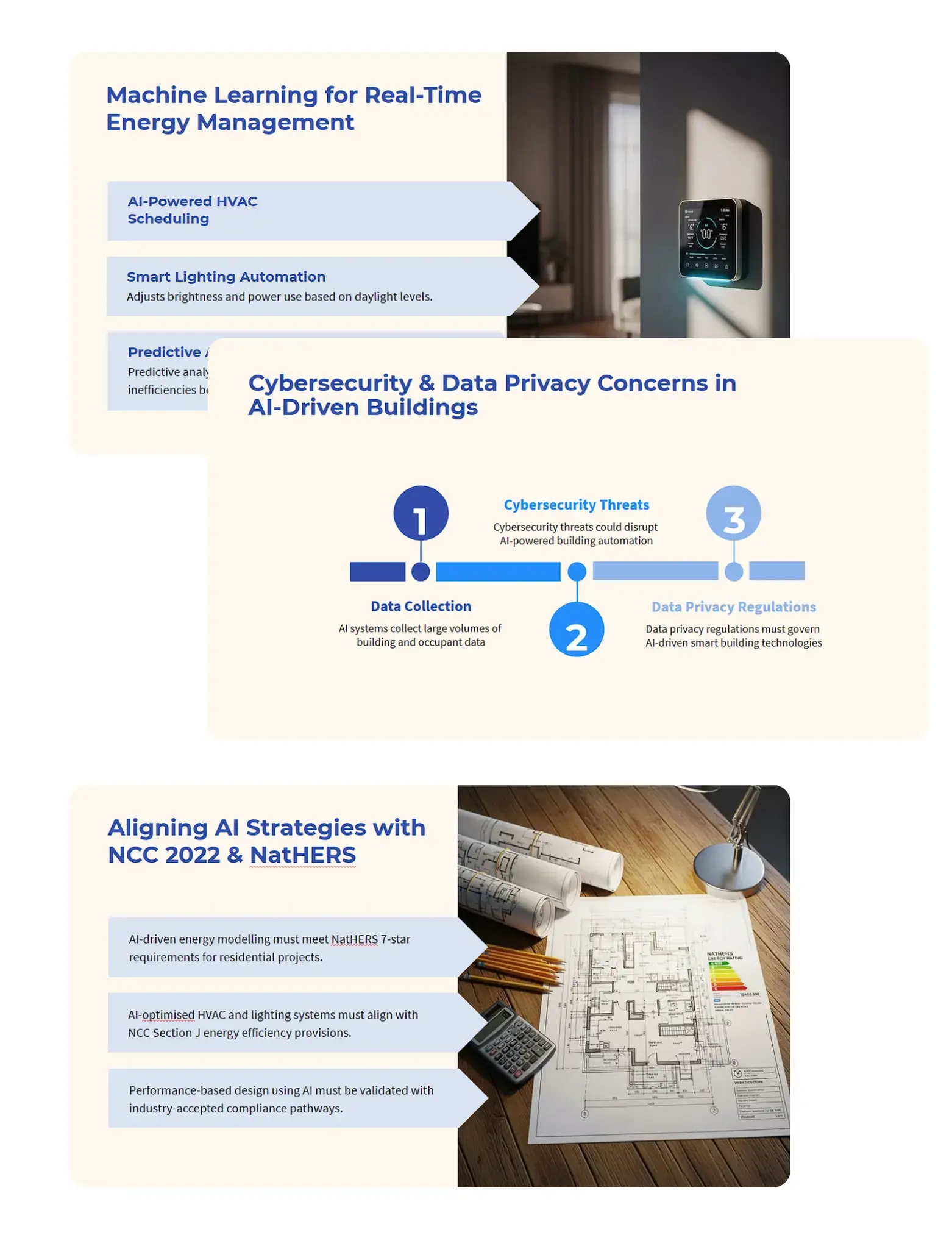
This course explores how AI technologies enhance building energy efficiency, predictive maintenance, and operational management. It covers core tools like digital twins, automated controls, and AI-driven simulations, demonstrating their application through Australian case studies. The course aligns AI practices with NCC 2022 and NatHERS compliance, while addressing cybersecurity, data privacy, and integration challenges. Participants gain practical insights into optimising building performance, reducing costs, and supporting sustainability through intelligent systems.
Why Take This CPD Session?

This CPD session is essential for professionals looking to harness AI and machine learning to optimise building performance, energy efficiency, and predictive maintenance.
It provides a comprehensive understanding of how AI-driven solutions align with NCC 2022, NatHERS, and Australian energy regulations to ensure compliance and sustainability.
Through real-world case studies and best practices, you’ll gain the skills to implement AI-powered strategies that enhance building automation, reduce operational costs, and improve long-term efficiency.
Professional development is an investment in career growth and regulatory compliance. Take the next step today.