

Course Content
★★★★★
This advanced CPD course introduces architects, building designers, and engineers to the role of artificial intelligence and computational design in contemporary architectural practice. It explains how generative design and AI driven simulation can support early concept exploration, performance evaluation, and evidence based decision making. The course also shows how these tools align with the Australian regulatory framework, particularly the performance based structure of the National Construction Code and NatHERS assessments. Participants learn how digital methods can improve energy performance, daylight access, and overall design efficiency while supporting compliance pathways. The session concludes by addressing ethical considerations, professional responsibility, and best practice principles for responsible use of AI in architectural design.
This CPD provides general guidance on professional responsibilities and documentation practices. It does not constitute legal advice or replace project-specific contractual or statutory obligations.

This session is designed for

Architects

Building Designers

Building Surveyors

Certifiers

Building Performance Engineers
By the end of this course, participants will be able to identify key artificial intelligence and computational design tools used in architectural and building design practice. They will be able to apply generative design methods to explore design options during early concept stages. Participants will also be able to evaluate building performance using AI assisted simulation and analysis. They will understand how these digital methods support compliance with the National Construction Code and NatHERS requirements. Finally, participants will be able to recognise the ethical, professional, and regulatory responsibilities associated with using AI in design practice.
This ensures that CPD efforts align with professional regulatory requirements.
What’s Included
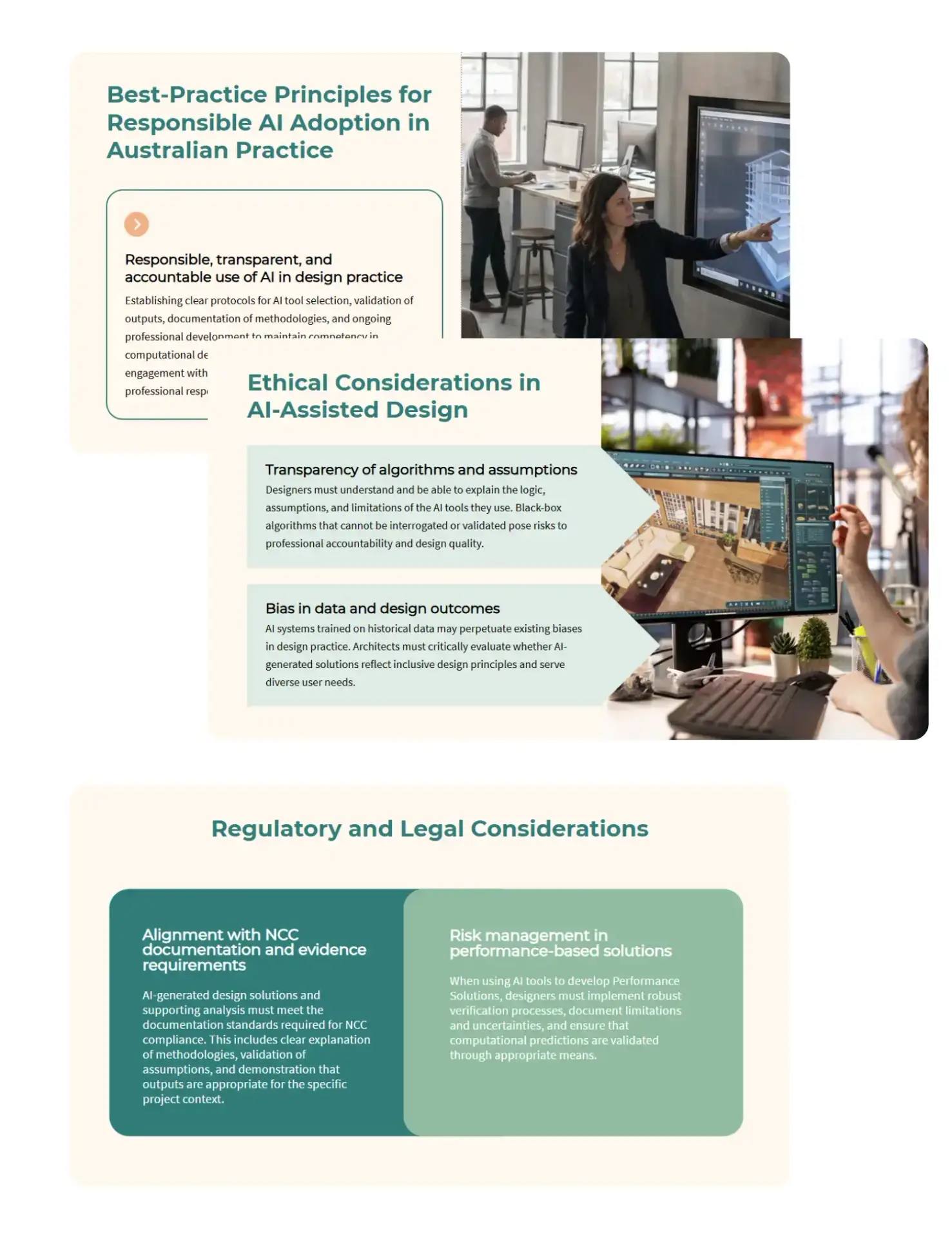
This course examines how emerging digital technologies are transforming the way buildings are designed and evaluated in professional practice. It explores the integration of computational processes into architectural workflows and how these methods help manage complex design constraints. The session also investigates how data informed analysis can improve decision making during the early stages of a project. Attention is given to the relationship between digital modelling, environmental performance, and regulatory expectations in Australia. The course further considers governance, transparency, and professional responsibility when advanced design technologies are used in real projects.
Why Take This CPD Session?

Gain practical insight into how advanced digital design methods can support better architectural decision making.
Learn how performance analysis and simulation can strengthen design outcomes and improve regulatory compliance.
Understand how to responsibly integrate emerging technologies into professional architectural workflows.
Professional development is an investment in career growth and regulatory compliance. Take the next step today.