

Course Content
By the end of this course, participants will be able to identify key artificial intelligence and computational design tools used in architectural and building design practice. They will be able to apply generative design methods to explore design options during early concept stages. Participants will also be able to evaluate building performance using AI assisted simulation and analysis. They will understand how these digital methods support compliance with the National Construction Code and NatHERS requirements. Finally, participants will be able to recognise the ethical, professional, and regulatory responsibilities associated with using AI in design practice.
Learning Outcomes
This ensures that CPD efforts align with professional regulatory requirements.
This CPD provides general guidance on professional responsibilities and documentation practices. It does not constitute legal advice or replace project-specific contractual or statutory obligations.
Compliance and Accreditation
|
Framework/Body |
Relevant Sections |
Focus Areas |
|
National Construction Code (NCC 2022) |
Performance-based compliance pathways; Performance Solutions and verification methods; energy efficiency provisions (Whole-of-Home and Section J); documentation/evidence expectations for demonstrating compliance |
Using AI/computational design to test and document performance outcomes (thermal, daylight, energy); generating traceable evidence to support Performance Requirements; transparency of assumptions, inputs, and limitations in compliance submissions |
|
NatHERS Protocols |
Thermal performance modelling and rating workflow; inputs/assumptions and model integrity; using simulation outcomes to inform design decisions prior to assessment |
AI-assisted iteration to improve NatHERS outcomes; early-stage envelope and massing decisions informed by thermal modelling; aligning design optimisation with compliant NatHERS pathways (decision-support, not certification) |
|
ABSA CPD Competency Area |
Building sustainability assessment capabilities (modelling/simulation literacy; evidence-based sustainability decision-making; ethical and professional responsibilities in assessment-related workflows) |
Interpreting AI-driven simulation outputs for sustainability outcomes; validating data quality and bias risks; documenting methodology for defensible performance advice |
|
Building Designers |
Design workflow integration (concept → development); planning constraints and feasibility; coordination of performance testing; responsible use of digital tools |
Generative concept exploration within planning/NCC constraints; performance-driven iteration (solar access, overshadowing, thermal/daylight); buildability awareness while maintaining design intent |
|
NSCA 2021 (Architects) |
PC17, PC20, PC28, PC31, PC33, PC45 |
Applying computational methods to refine concept options; integrating performance analysis into design development and documentation; ethical governance of AI outputs; clear communication of assumptions and limitations to stakeholders/regulators |
|
Engineers Australia (Stage 2) |
Problem analysis and solution synthesis using contemporary tools; evaluation and verification; risk and professional responsibility; communication of technical outcomes |
AI-enabled simulation for thermal/daylight/energy performance; selecting and validating modelling approaches; documenting decisions and limitations; interdisciplinary collaboration across design teams |
|
Building Surveyors |
Assessment of compliance pathways; review of Performance Solutions evidence; documentation sufficiency and traceability; understanding modelling assumptions and verification methods |
Interpreting AI/simulation evidence supporting NCC compliance; checking transparency, inputs, and limitations; aligning outputs with acceptable verification methods and robust documentation |
|
Urban Planners & Landscape Architects |
Planning controls, massing limits, site constraints; solar access/overshadowing impacts; option testing to support planning negotiations |
Generative massing and layout optimisation against planning controls; quantifying solar access and overshadowing outcomes; communicating scenario testing to planning stakeholders |
This session is designed for

Architects

Building Designers

Building Surveyors

Certifiers

Building Performance Engineers
What’s Included
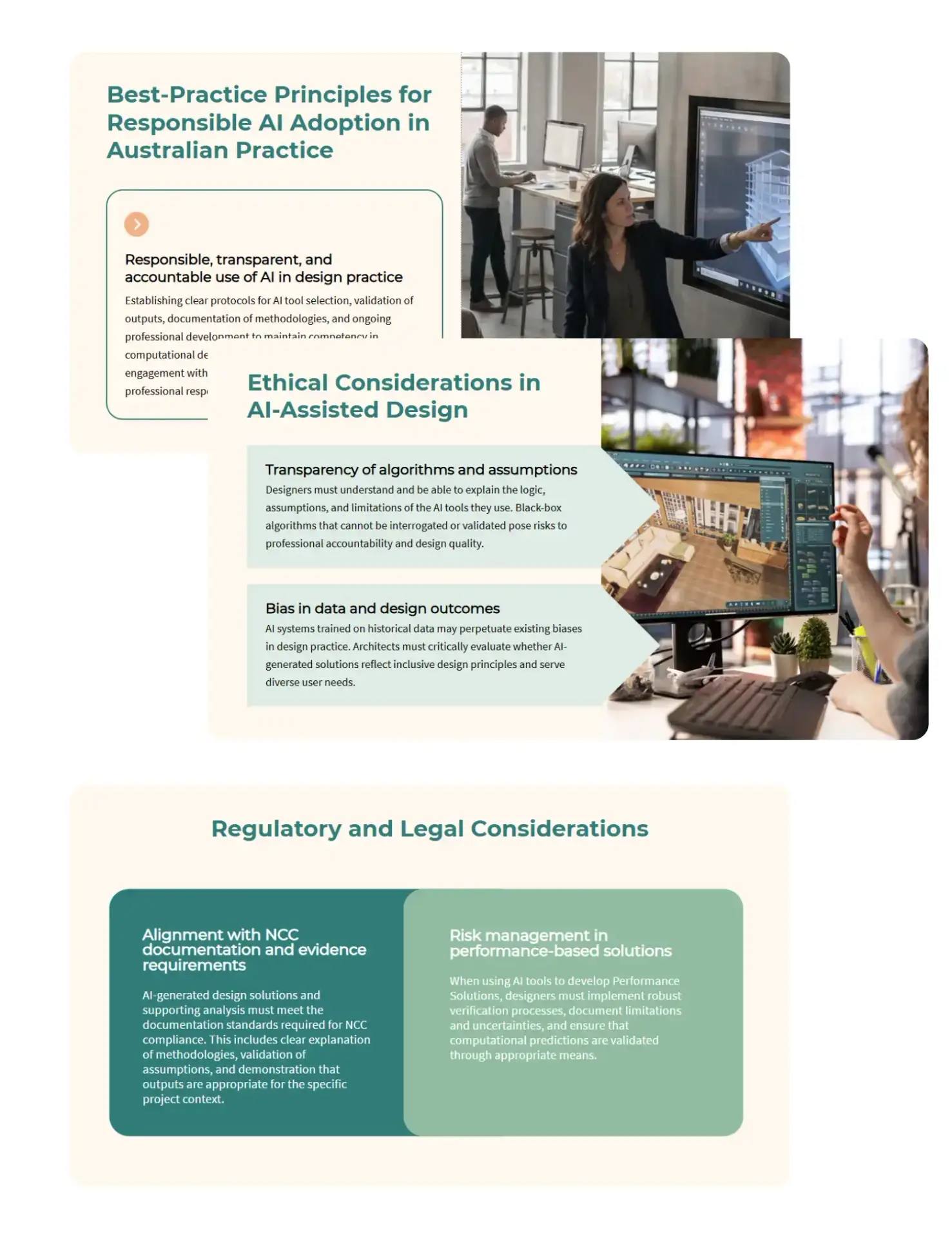
This course examines how emerging digital technologies are transforming the way buildings are designed and evaluated in professional practice. It explores the integration of computational processes into architectural workflows and how these methods help manage complex design constraints. The session also investigates how data informed analysis can improve decision making during the early stages of a project. Attention is given to the relationship between digital modelling, environmental performance, and regulatory expectations in Australia. The course further considers governance, transparency, and professional responsibility when advanced design technologies are used in real projects.
Why Take This CPD Session?

Gain practical insight into how advanced digital design methods can support better architectural decision making.
Learn how performance analysis and simulation can strengthen design outcomes and improve regulatory compliance.
Understand how to responsibly integrate emerging technologies into professional architectural workflows.
Professional development is an investment in career growth and regulatory compliance. Take the next step today.