

Course Content
By the end of this session, you will understand the full scope of Whole-of-Home (WoH) compliance, including how thermal performance, fixed appliances, and renewable systems contribute to a building’s energy profile under NCC 2022. You’ll learn how to model each component accurately using NatHERS-accredited software, apply defaults appropriately, and document all assumptions to meet audit and certification requirements. You will also be able to identify when re-rating is necessary due to design changes and how to manage compliance documentation with transparency and consistency.
Learning Outcomes
This ensures that CPD efforts align with professional regulatory requirements.
This CPD provides general guidance on professional responsibilities and documentation practices. It does not constitute legal advice or replace project-specific contractual or statutory obligations.
Compliance and Accreditation
|
Framework/Body |
Relevant Sections |
Focus Areas |
|
National Construction Code (NCC 2022) |
Volume Two Energy Efficiency provisions; J3D14 (Vol 1), Part 13.6 Housing Provisions |
Whole-of-Home compliance scope; use of NatHERS tools; appliance & service modelling pathways; Evidence of Suitability (Part A5) |
|
NatHERS Protocols |
Protocols for Whole-of-Home assessments and software integration |
Accredited software use, plug loads, PV/battery modelling, thermal shell integration |
|
ABSA CPD Competency Area |
Technical and Regulatory Knowledge; Professional Practice |
Appliance input standards; accuracy in modelling; managing defaults and assumptions; documentation for audit |
|
Building Designers |
Design compliance practices under NCC and state-based frameworks |
Modelling for WoH outcomes; appliance integration; design decision impacts on energy performance |
|
NSCA 2021 (Architects) |
PC10, PC20, PC31, PC33, PC45 |
Whole-of-Home as compliance responsibility; energy system design; lifecycle energy impact; statutory requirements; operational and embodied carbon knowledge |
|
Engineers Australia (Stage 2) |
Technical Proficiency; Design and Innovation; Safety Responsibility |
Appliance system design integration; evidence-based modelling; electrical and HVAC system efficiency; ensuring compliant, sustainable system selection |
|
Licensed Builders (State CPD) |
NCC-aligned design and installation compliance; sustainability mandates |
Understanding re-rating triggers; service efficiency impacts; site design implications |
|
Building Surveyors |
NCC Part A5 – Evidence of Suitability; audit readiness |
Verifying WoH documentation; interpreting modelling reports; verifying appliance/system selections |
This session is designed for

Energy Assessors

Engineers

Building Designers
Builders

Architects
What’s Included
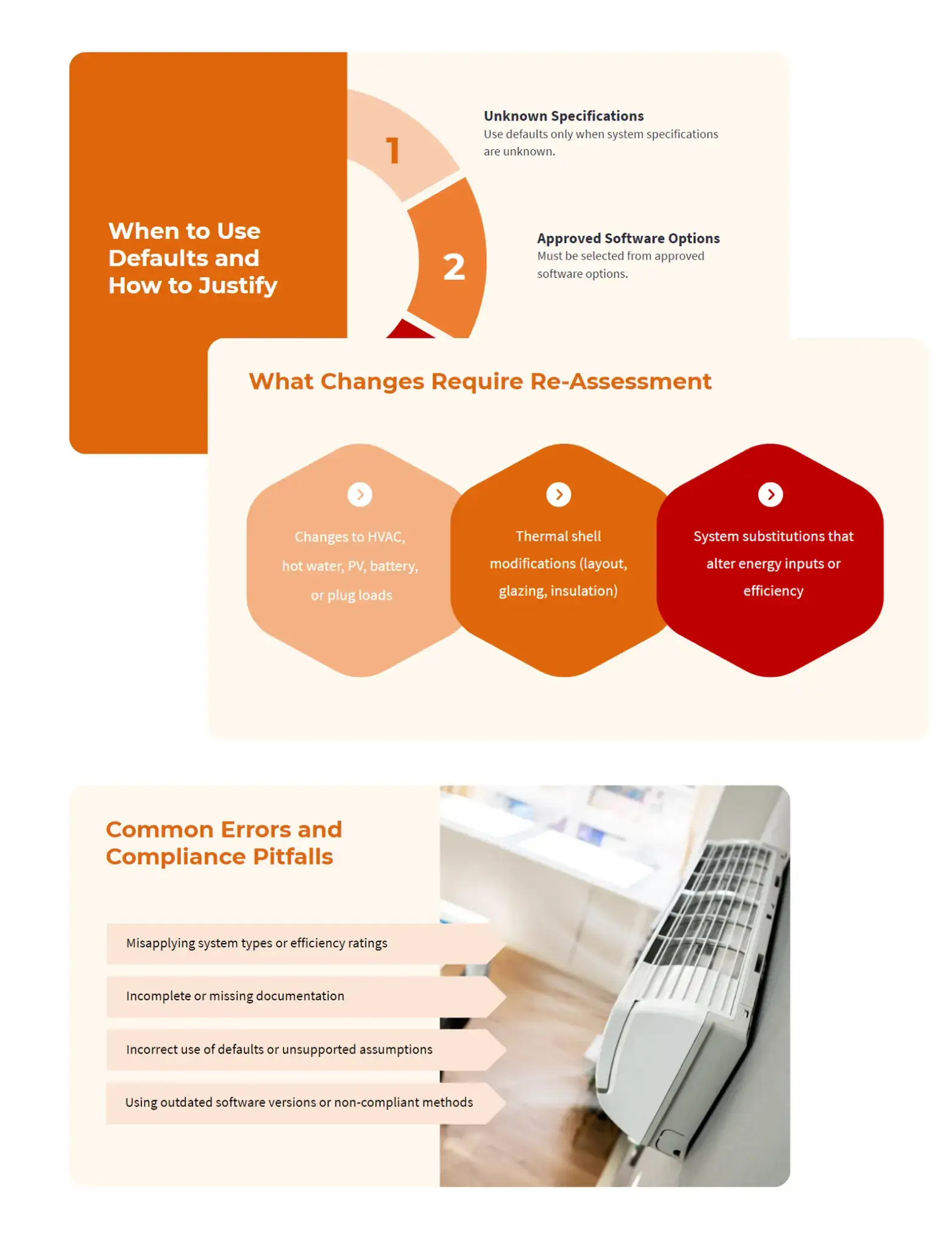
This course covers the full process of conducting Whole-of-Home (WoH) energy assessments in line with NCC 2022 and NatHERS requirements. It teaches how to model thermal performance, fixed appliances, PV systems, batteries, and plug loads using accredited software and standard efficiency factors. Participants learn when to apply defaults, how to justify assumptions, and how to manage re-ratings due to design changes. The course also explains how to produce audit-ready compliance documentation aligned with NCC Part A5.
Why Take This CPD Session?

Stay up to date with the latest NCC 2022 Whole-of-Home compliance requirements and their practical application.
Gain confidence in using NatHERS-accredited software to accurately model fixed appliances, renewables, and plug loads.
Learn how to avoid compliance risks and produce transparent, audit-ready reports for certification.
Professional development is an investment in career growth and regulatory compliance. Take the next step today.