

Course Content
By the end of this course, participants will be able to clearly define essential energy efficiency principles and understand their importance in residential building design. They will also be equipped to identify and apply NCC 2022 and NatHERS compliance requirements, and explore practical, cost-effective strategies—such as passive design and smart material choices—for improving home energy performance. Through real-world examples, learners will gain the skills to confidently integrate energy-efficient solutions into their design, building, or assessment practices.
Learning Outcomes
This ensures that CPD efforts align with professional regulatory requirements.
This CPD provides general guidance on professional responsibilities and documentation practices. It does not constitute legal advice or replace project-specific contractual or statutory obligations.
Compliance and Accreditation
|
Framework/Body |
Relevant Sections |
Focus Areas |
|
National Construction Code (NCC 2022) |
Volume 2 – Section H6; |
Covers 7-star NatHERS minimum, WHEF compliance, building envelope strategies, passive solar design, and renewable system integration |
|
NatHERS Protocols |
Star Ratings; |
Directly relevant—teaches how to calculate ratings, understand state variations, and optimise energy loads for compliance |
|
ABSA CPD Competency Area |
3.2 – Thermal Envelope; |
Supports assessors with compliance pathways, software outputs, and design strategies to meet rating targets |
|
Building Designers |
BDAA CPD – Energy Modelling, Passive Design, Regulatory Compliance |
Equips designers with tools to exceed NCC standards through good design and cost-effective energy performance solutions |
|
NSCA 2021 (Architects) |
PC10, PC12, PC24, PC33, PC35, PC45 |
Applies to building envelope detailing, energy-efficient specification, climate-responsive design, and holistic performance strategy |
|
Engineers Australia (Stage 2) |
Energy Systems; |
Supports technical professionals responsible for system integration, mechanical efficiency, and sustainable building performance |
|
Licensed Builders (State CPD) |
NCC Section H6 Compliance; |
Ensures construction aligns with energy modelling; supports installation of insulation, glazing, and airtightness detailing |
|
Building Surveyors |
Verification of NCC H6 Compliance; NatHERS Documentation Review |
Focus on assessing evidence of suitability, verifying Whole-of-Home and NatHERS performance ratings in approval process |
This session is designed for

Architects

Building Designers

Builders

Energy Assessors
What’s Included
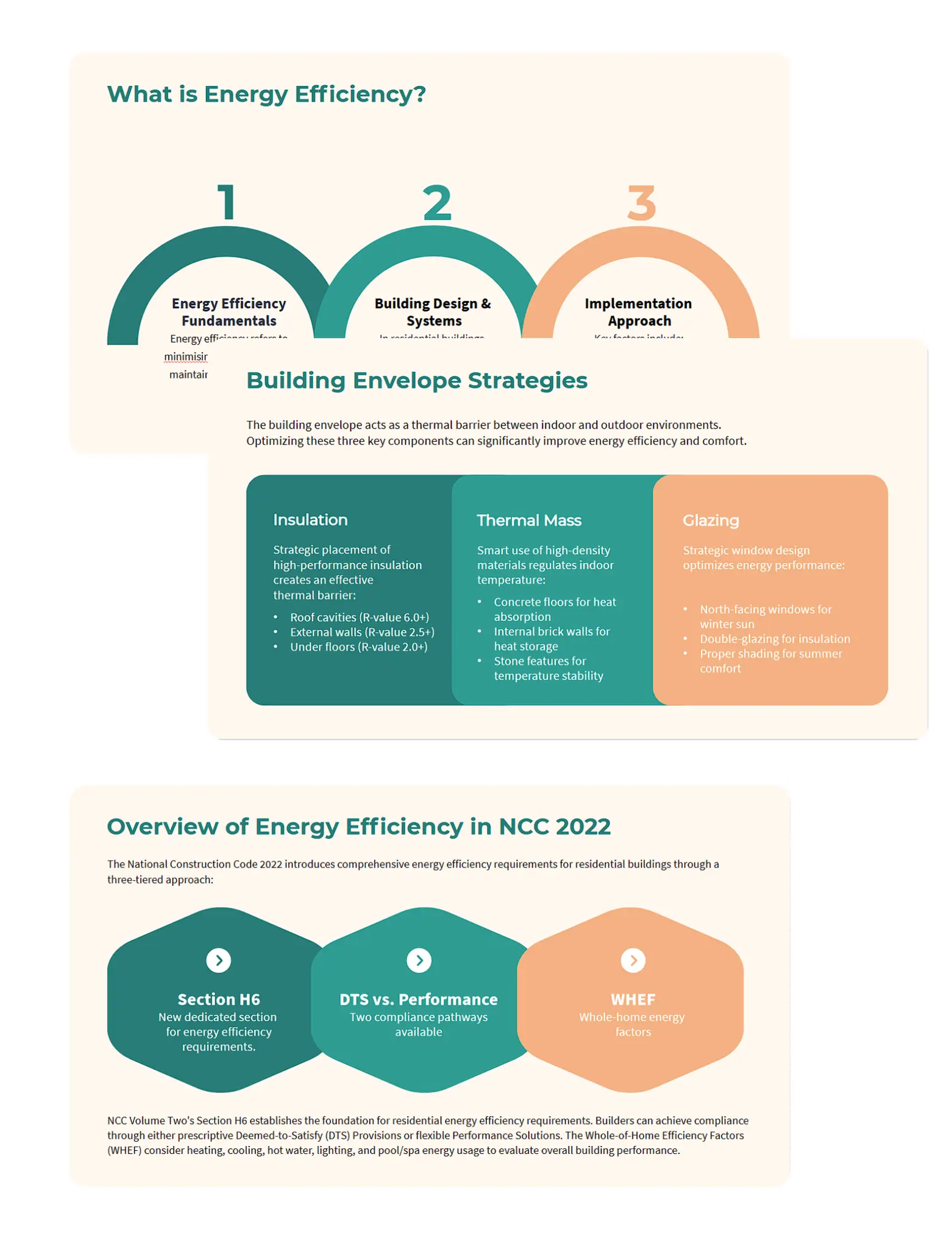
The course covers renewable energy integration, smart home technology, and practical strategies to improve energy efficiency in new and existing homes. Through real-world case studies and interactive discussions, professionals gain actionable insights to apply energy-efficient solutions to their projects. This session is designed for architects, building designers, builders, and energy assessors looking to enhance their knowledge and meet the latest energy efficiency requirements.
Why Take This CPD Session?

This CPD session equips professionals with practical knowledge on energy efficiency principles, NCC 2022 compliance, and NatHERS rating requirements to meet evolving industry standards.
By learning effective design strategies, material choices, and whole-of-home efficiency approaches, participants can create more sustainable, cost-effective, and high-performing residential buildings.
Staying updated with regulatory changes and best practices ensures improved project outcomes, greater energy savings, and enhanced occupant comfort.
Professional development is an investment in career growth and regulatory compliance. Take the next step today.