

Course Content
★★★★★
This CPD course explains how to integrate daylight and electric lighting systems to improve energy efficiency, visual comfort, and compliance in Australian buildings. It aligns with NCC 2022 and NatHERS requirements, helping architects and designers understand how lighting decisions influence performance and amenity outcomes. Participants learn how to combine daylighting strategies with automated controls, apply sensors to reduce lighting energy demand, and model lighting scenarios in both residential and commercial projects. The course also outlines compliance pathways, documentation expectations, and common modelling risks that can affect approval outcomes. A strong focus is placed on layered lighting and glare management to ensure comfortable, compliant, and well performing indoor environments.
This CPD provides general guidance on professional responsibilities and documentation practices. It does not constitute legal advice or replace project-specific contractual or statutory obligations.

This session is designed for

Architects

Building Designers

Lighting Designers

Energy Assessors

Engineers
By the end of this course, participants will be able to integrate daylighting strategies with electric lighting systems to create energy efficient and visually comfortable environments. They will understand how to apply sensors and control systems to reduce lighting energy demand in both residential and commercial projects. Participants will be able to evaluate and model lighting scenarios to support compliance with NCC Performance Requirements. They will gain the ability to document lighting strategies clearly for approval pathways, including Performance Solutions. They will also be equipped to design layered lighting schemes that manage glare, improve visual comfort, and support overall building amenity outcomes.
This ensures that CPD efforts align with professional regulatory requirements.
What’s Included
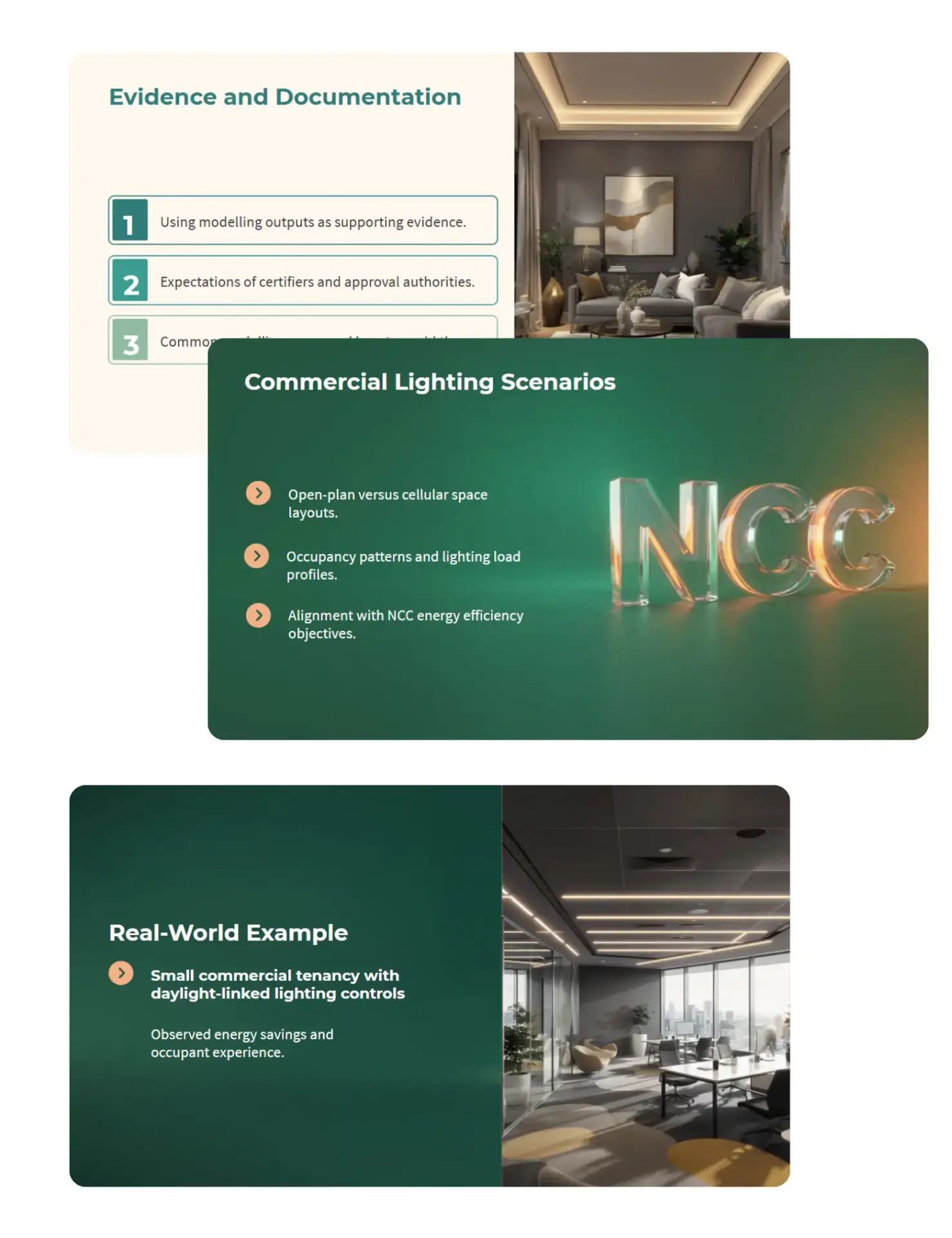
This course examines the relationship between natural light and artificial lighting within contemporary Australian building design. It explores how regulatory requirements influence lighting decisions and how designers can respond strategically to meet performance expectations. The content reviews the role of control systems and automation in improving operational efficiency. It also investigates how modelling tools can be used to predict lighting performance and inform compliance documentation. In addition, the course considers visual comfort principles and how thoughtful lighting integration contributes to healthier, more functional indoor environments.
Why Take This CPD Session?

Gain practical strategies to meet NCC energy efficiency and amenity requirements through integrated lighting design.
Improve your ability to reduce operational energy use by applying effective daylight and lighting control solutions.
Strengthen your compliance documentation and modelling approach to support smoother approvals and better performing buildings.
Professional development is an investment in career growth and regulatory compliance. Take the next step today.