

Course Content
★★★★★
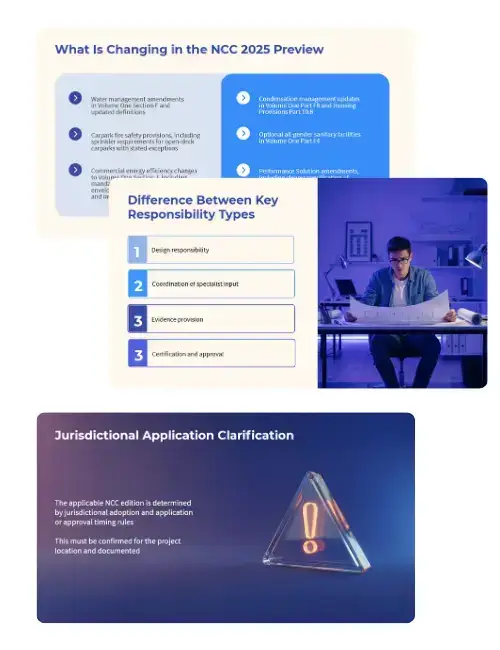
This course explains how the National Construction Code (NCC) actually works in real projects, including how it is structured and how it is applied across different building classes and volumes. It breaks down the main compliance pathways (Deemed-to-Satisfy, Performance Solutions, and Verification Methods) and shows how each pathway affects documentation and risk. It also explains who is responsible for what under the NCC, including the roles of designers, builders, certifiers, and specialist contractors. The course highlights common compliance mistakes, especially where responsibilities and evidence are unclear or poorly documented. Finally, it provides an updated overview of the NCC 2025 preview, explaining what is changing, what is not changing, and why assumptions during transition periods can create serious compliance risks.
This CPD provides general guidance on professional responsibilities and documentation practices. It does not constitute legal advice or replace project-specific contractual or statutory obligations.

This session is designed for

Architects

Building Designers

Building Surveyors

Certifiers

Project Managers
By the end of this course, participants will understand how the NCC is structured and how to correctly apply its volumes, clause hierarchy, and governing requirements on real projects. They will be able to clearly explain the difference between Performance Requirements, Deemed-to-Satisfy provisions, Verification Methods, and Performance Solutions. Participants will understand how NCC compliance pathways operate and how each pathway affects documentation, evidence requirements, and project risk. They will also recognise how professional responsibility is distributed across designers, builders, certifiers, and specialist contractors, and why compliance failures often occur when responsibility is unclear. Finally, they will understand what the NCC 2025 preview includes, what it does not include, and how to avoid incorrect assumptions during transition and adoption periods.
This ensures that CPD efforts align with professional regulatory requirements.
What’s Included
This course explores how the NCC functions in practice and why misunderstandings often lead to compliance problems on real projects. It explains how to navigate the Code properly, including how to determine what applies based on building classification and jurisdictional rules. It also covers the different ways compliance can be demonstrated, and what level of evidence is expected for each approach. The course clarifies how compliance responsibility is divided across project roles and why gaps in documentation are a common risk. It finishes by unpacking the NCC 2025 preview so participants can understand the updates without assuming changes that are not yet adopted.
Why Take This CPD Session?

Gain a clear and practical understanding of how the NCC is applied in real projects, reducing confusion and costly compliance mistakes.
Learn how to choose and document the correct compliance pathway with confidence, including what evidence certifiers actually expect.
Understand responsibility and upcoming NCC 2025 changes so you can manage risk, avoid incorrect assumptions, and protect your professional position.
Professional development is an investment in career growth and regulatory compliance. Take the next step today.