

Course Content
★★★★★
This advanced CPD course is designed for architects and building designers to strengthen their ability to make rigorous, defensible embodied carbon decisions in practice. It focuses on whole of life carbon thinking, helping participants identify where the greatest reduction opportunities exist and how timing affects those outcomes. The course builds practical skills in reading Environmental Product Declarations and applying lifecycle stage logic to compare structural and cladding systems against carbon targets. It also addresses common risks in specification by teaching how to critically assess marketing claims that do not align with lifecycle assessment data. Through applied case studies and structured frameworks, it equips practitioners to integrate embodied carbon analysis into real project decision making with confidence.
This CPD provides general guidance on professional responsibilities and documentation practices. It does not constitute legal advice or replace project-specific contractual or statutory obligations.

This session is designed for

Architects

Building Designers

Structural Engineers

Sustainability Consultants

Builders
By the end of this course, participants will be able to identify the highest impact stages of a project using whole of life carbon thinking and explain how timing influences carbon reduction opportunities. They will be able to read and interpret Environmental Product Declarations accurately and apply them to real specification decisions. Participants will be able to compare structural and cladding systems using lifecycle stage logic and evaluate them against defined carbon targets. They will also be able to recognise and challenge common marketing claims that do not hold up under lifecycle assessment scrutiny. Overall, they will be equipped to make and defend evidence based embodied carbon decisions in professional practice.
This ensures that CPD efforts align with professional regulatory requirements.
What’s Included
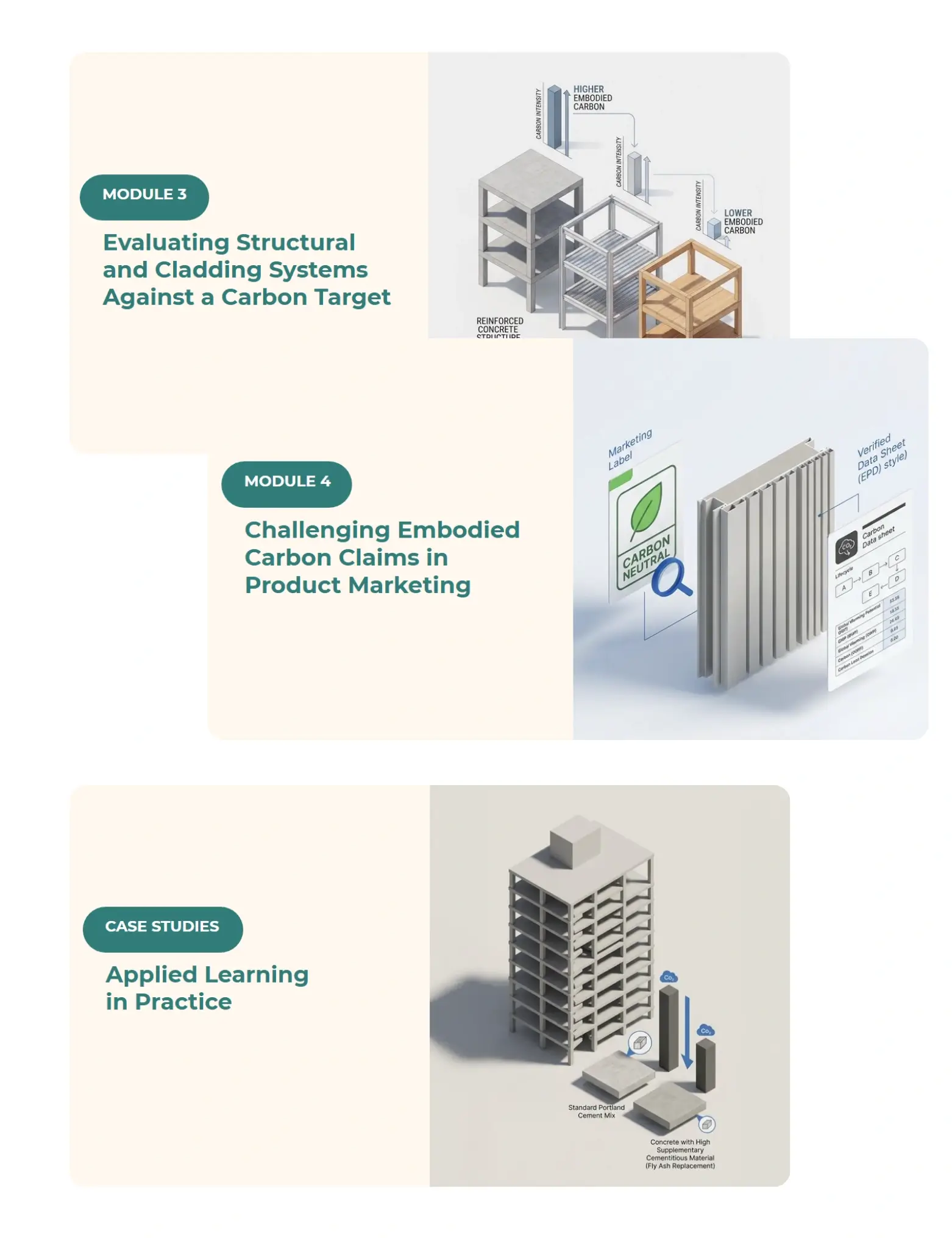
This course examines how embodied carbon is measured across a building’s lifecycle and where it concentrates within different project types. It explores the practical use of lifecycle assessment tools, including how to interpret data and apply it to real design and specification decisions. The course also investigates how different structural and cladding systems perform from a carbon perspective and what variables influence those outcomes. In addition, it analyses the gap between product marketing claims and verified environmental data, highlighting risks in specification. Overall, it looks at how design decisions, data interpretation, and documentation practices interact to shape credible low carbon outcomes in the built environment.
Why Take This CPD Session?

Strengthen your ability to make confident, evidence based embodied carbon decisions that stand up to client and peer scrutiny.
Gain practical tools and frameworks that can be immediately applied to real projects and specification workflows.
Reduce professional risk by learning how to interpret data correctly and challenge misleading product claims.
Professional development is an investment in career growth and regulatory compliance. Take the next step today.