

Course Content
By the end of this session, participants will have a clear understanding of how sound travels through buildings, the specific acoustic performance requirements outlined in NCC 2022, and the practical materials and construction methods needed to achieve compliance. They will also be equipped to identify common noise-related issues on site and apply simple, effective solutions in both new builds and renovations.
Learning Outcomes
This ensures that CPD efforts align with professional regulatory requirements.
This CPD provides general guidance on professional responsibilities and documentation practices. It does not constitute legal advice or replace project-specific contractual or statutory obligations.
Compliance and Accreditation
|
Framework/Body |
Relevant Sections |
Focus Areas |
|
National Construction Code (NCC 2022) |
Vol. One: Section F7, Specification 28; |
Acoustic compliance for Class 1–10 buildings; Rw, Rw+Ctr, Ln,w metrics |
|
NatHERS Protocols |
Indirectly addressed; complements thermal and acoustic envelope analysis |
Building envelope integrity, material interfaces |
|
ABSA CPD Competency Area |
Acoustics as part of building performance; integration with thermal modelling |
Noise control strategies; energy and acoustic co-performance |
|
Building Designers |
Acoustic detailing in walls/floors; selection of compliant construction systems |
Design integration of acoustic materials; documentation standards |
|
NSCA 2021 (Architects) |
PC10, PC31, PC33, PC45 |
NCC compliance; environmental systems integration; technical documentation |
|
Engineers Australia (Stage 2) |
Performance evaluation; integration of systems; project delivery |
Acoustic engineering interface; compliance with NCC; systems coordination |
|
Licensed Builders (State CPD) |
On-site acoustic installation techniques; retrofitting for compliance |
Tradie practices; builder responsibilities; product implementation |
|
Building Surveyors |
Assessment of acoustic compliance post-construction |
Verification of Rw and Ln,w ratings; DTS pathway understanding |
This session is designed for

Architects

Building Designers

Builders

Energy Assessors

Building Surveyors
What’s Included
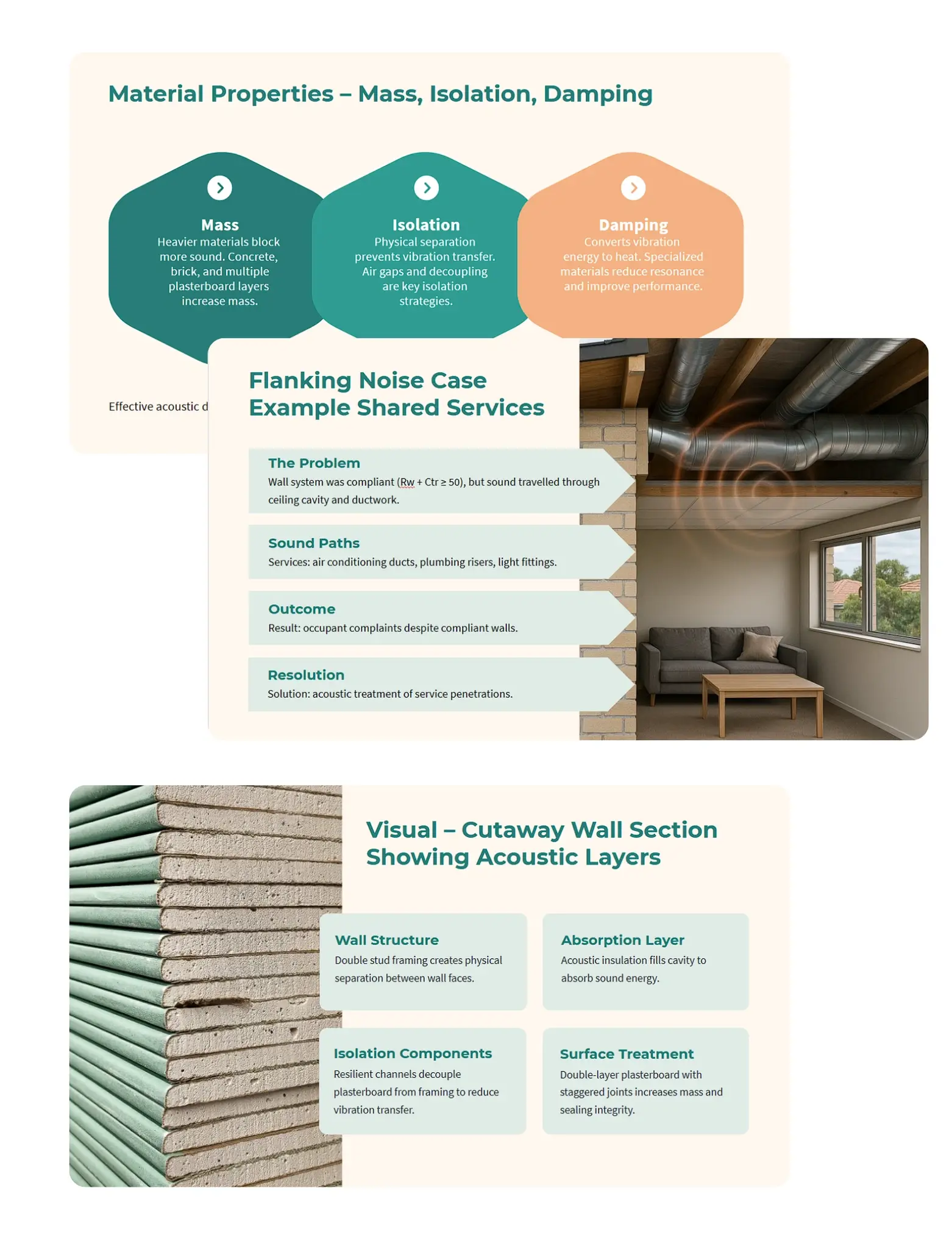
The course covers how sound moves through buildings and how to manage it effectively using NCC-compliant strategies. The course includes key acoustic standards, common failure points, and practical construction techniques to reduce airborne, impact, and flanking noise in both new builds and renovations. It also provides real-world examples, system design tips, and on-site solutions to help builders, designers, and certifiers deliver quieter, code-compliant buildings with confidence.
Why Take This CPD Session?

Take this course to gain a clear understanding of how to reduce noise in buildings and meet NCC 2022 acoustic compliance requirements.
It equips you with practical, real-world techniques to avoid common soundproofing failures during construction and renovation.
Ideal for builders, tradies, and certifiers, it helps protect your projects—and your reputation—by ensuring quieter, more comfortable spaces.
Professional development is an investment in career growth and regulatory compliance. Take the next step today.