
The 5 Whole-of-Home Assumptions That Are Most Likely to Fail (and Cost You Time or Rework)

Current Status

Not Enrolled

Price

Closed

Get Started

This 60-minute CPD course helps building and architectural designers understand the most common “Whole-of-Home” assumptions that can quietly trigger rework and compliance delays under NCC 2022. It focuses on practical risk awareness rather than technical calculations, showing how small changes to layout, glazing, lighting, or services can have disproportionate impacts on assessment outcomes. Participants learn why assessors may request revisions late in the documentation or approvals stage, even when the design feels largely unchanged. The course breaks down five key assumptions, including the idea that minor changes will not matter and that past approvals guarantee repeat compliance. By the end, designers are better equipped to anticipate compliance sensitivities early and reduce redesign, reassessment cycles, and project uncertainty.

  • CPD Points: 1 Formal CPD Point
  • Duration: 1 hour
  • Certificate Upon Completion
  • Difficulty Level: Intermediate

This session is designed for

Architects
Building Designers
Energy Assessors
Small Practice Principals
Document Coordinators

By the end of this course, participants will understand the five Whole-of-Home assumptions most likely to fail and why they cause rework or delays. They will know how small design decisions can create major compliance and performance impacts. Participants will recognise the common points where projects derail late in the process, even when the design feels nearly complete. They will be able to spot early warning signs in plans and specifications that may trigger assessor feedback. Finally, they will leave with practical strategies to reduce reassessment cycles and improve project certainty.

  • Identify the five Whole-of-Home assumptions most likely to fail during compliance and performance assessment.
  • Evaluate how design, specification, and documentation decisions influence assessment certainty and timeframes.
  • Explain why small design changes can create disproportionate impacts on overall project outcomes.
  • Apply practical strategies to reduce avoidable rework, delays, and compliance-related project risk.
  • Recognise the common triggers that lead to late-stage reassessment requests and design revisions.
  • Improve coordination with assessors by anticipating issues earlier in the design and documentation process.

This ensures that CPD efforts align with professional regulatory requirements.

Framework/Body

Relevant Sections

Focus Areas

National Construction Code (NCC 2022)

Section J (Energy Efficiency); Whole-of-Home provisions

Emphasis on cumulative impacts of design decisions, system-level interactions (e.g. services, lighting, glazing), and importance of accurate documentation late in design process.

NatHERS Protocols

Whole-of-Home Rating Methodology; Technical Note (V19+)

Clarifies how design assumptions impact assessor modelling; explains how small changes in layout, lighting, or services alter compliance outcomes.

ABSA CPD Competency Area

CPD Domains: 1 (Technical), 4 (Communication), 5 (Regulatory Awareness)

Supports professional judgement in documentation and early design phases; increases awareness of risk factors that affect assessment integrity.

Building Designers

State-based registration CPD (e.g., QBCC, VBA) and design documentation practice standards

Focuses on Whole-of-Home impacts of typical “minor” changes and responsibility in documentation accuracy.

NSCA 2021 (Architects)

PC10, PC20, PC31, PC33, PC45

Highlights the role of professional awareness, whole-system coordination, and anticipating design risks that affect Whole-of-Home ratings.

Engineers Australia (Stage 2)

Competency: Risk Management; Sustainable Design

Partial alignment for engineers involved in integrated services (e.g., HVAC or hot water system specs affecting Whole-of-Home results).

Licensed Builders (State CPD)

NSW, VIC, QLD CPD themes: Building design interpretation, energy performance implications

Relevant where builders engage in documentation interpretation or interact with assessors during approval stages.

Building Surveyors

NCC compliance verification processes; Role in interpreting updated Whole-of-Home assumptions

May benefit from awareness of rework triggers caused by design documentation inconsistencies or cumulative minor amendments.

Urban Planners & Landscape Architects

Not Applicable

The course focuses on architectural and energy compliance, not planning overlays, land use zoning or landscape. Removed due to non-alignment.

What’s Included

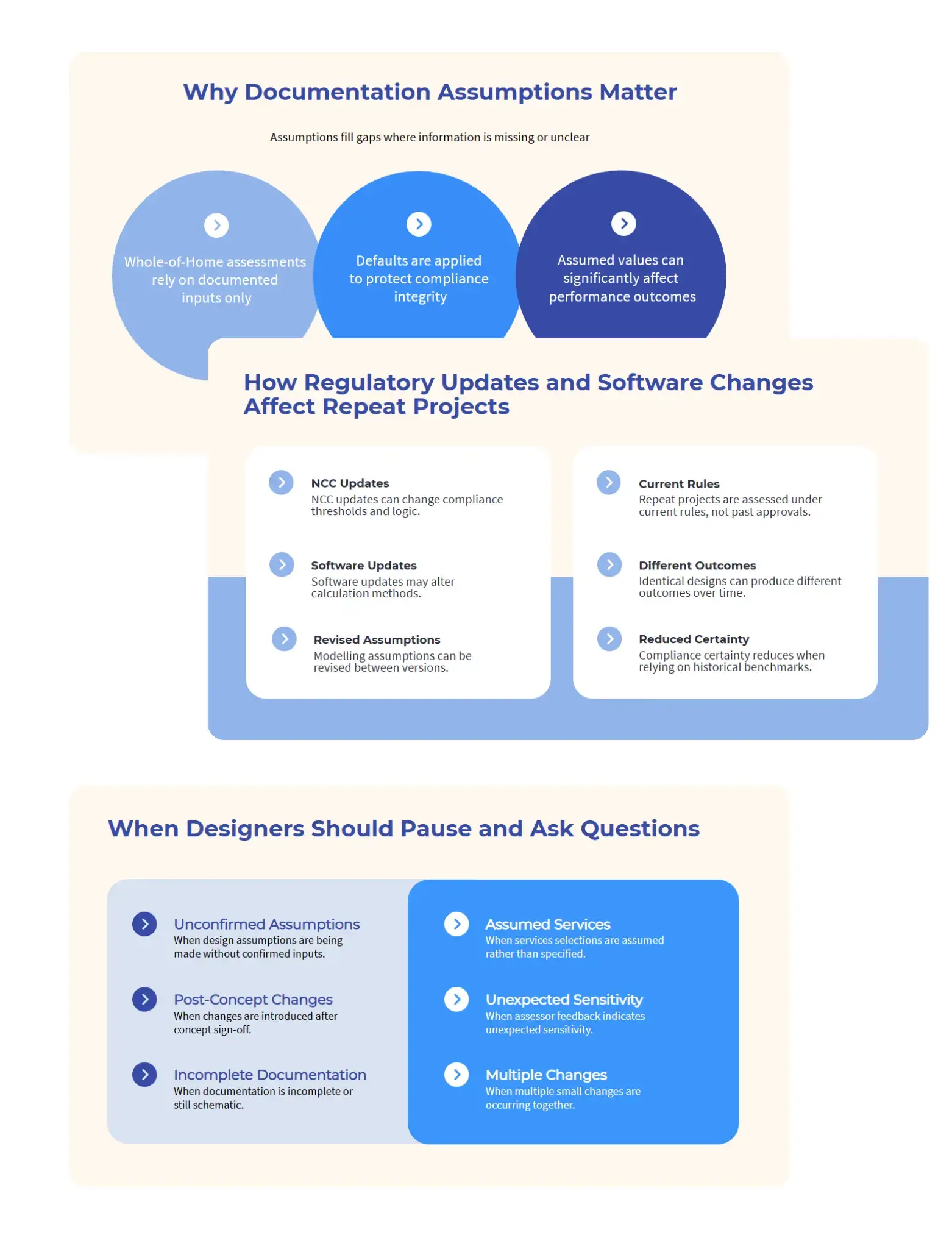
This course covers the five Whole-of-Home assumptions that most often fail and create delays or rework. It explains why small design changes can trigger bigger compliance and performance impacts than expected. Participants learn the common design and documentation issues that lead to late-stage assessor feedback. The course highlights how different building elements interact and create flow-on effects across the home. It also provides practical strategies to reduce reassessments and improve project certainty.
  • A 1-hour video session covering NCC-aligned strategies and real-world case studies.
  • An interactive quiz to test and reinforce knowledge.
  • An audio summary version via NotebookLM for flexible, on-the-go learning.
  • A downloadable certificate of completion for CPD compliance reporting.
  • Centralised CPD tracking dashboard to support audits and personal recordkeeping.

Why Take This CPD Session?

Avoid preventable redesign and reassessment by understanding the most common Whole-of-Home mistakes early.

Learn how small design decisions can impact compliance and performance outcomes, saving time and cost later.

Gain practical strategies to improve documentation confidence and reduce approval delays.

Professional development is an investment in career growth and regulatory compliance. Take the next step today.